Abercrombie's Brand Repositioning transformed its image, products and customer experience, driving a remarkable retail comeback!
Looking for a Shorter Overview?
AI Summary
Key Moments
Leadership Change
Fran Horowitz's 2017 appointment initiated fundamental brand questioning and transformationProduct Expansion
Shift from traditional casualwear to tailored clothing, dresses, suits, wedding apparel and Curve Love jeansStore Experience Overhaul
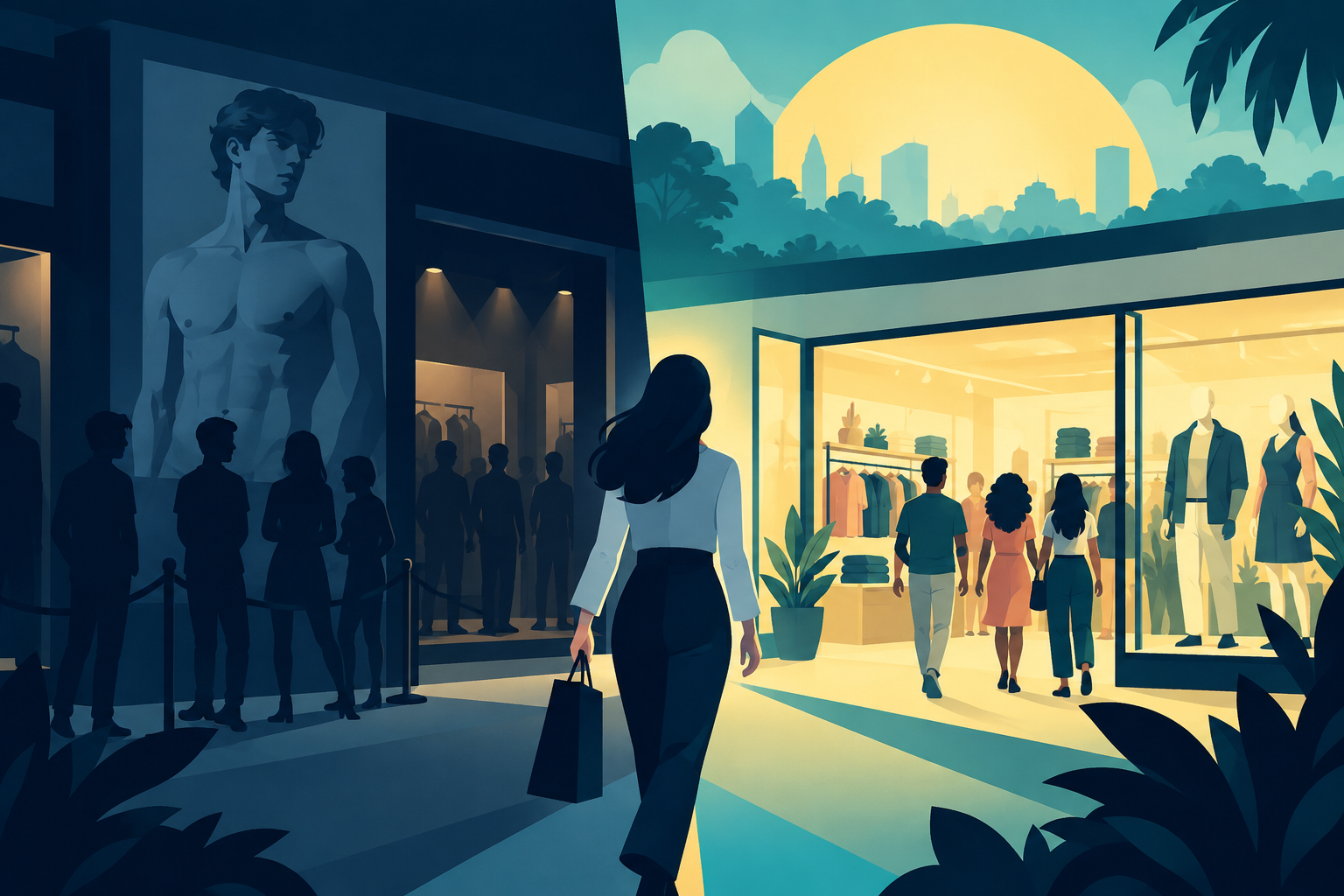
Transition from intimidating dark stores to bright, open environments without heavy fragrance and shirtless modelsMarketing Evolution
Shift from dictating lifestyle to showcasing customer-generated content and influencer partnershipsFor a brand that once built its identity around exclusivity, Abercrombie & Fitch has taken a remarkably different path. The retailer that was once known for shirtless models, dark stores, oversized logos, and a “cool kids only” image eventually became one of the most notable retail comeback stories of the 2020s. Its transformation was not simply a change in advertising. It was a long-term exercise in Brand Repositioning, involving its products, stores, marketing, customer experience, and understanding of who it wanted to serve.
Abercrombie’s decline was closely connected to the very positioning that had once made it successful. Under former CEO Mike Jeffries, the brand cultivated an image of youthful exclusivity, with highly sexualised advertising and a narrow idea of who represented the Abercrombie customer. Its stores reinforced that identity through dim lighting, loud music, heavy fragrance, and shirtless male models. While the approach resonated with a particular audience in the late 1990s and early 2000s, it increasingly felt out of step with changing consumer expectations. The company was eventually named America’s most hated retail brand in 2016.
How Brand Repositioning Helped Abercrombie Find Its Audience Again
The turning point came with Fran Horowitz, who became CEO in 2017. Instead of trying to make the old Abercrombie image fashionable again, the company began questioning the fundamentals of the brand. The focus shifted towards understanding customers, creating products around their changing lifestyles, and building a more inclusive identity. This was Brand Repositioning in the fullest sense: not changing a logo and calling it a rebrand, but changing what the brand stood for and how customers experienced it.
One of the smartest decisions was recognising that Abercrombie did not necessarily need to abandon the customers who had grown up with it. Millennials who had encountered the brand in their teenage years were now older, entering careers, attending weddings and looking for clothes that fitted different parts of their lives. Abercrombie responded by expanding beyond its traditional casualwear into products such as tailored trousers, dresses, suits and wedding clothing. Its Curve Love jeans also addressed a specific customer need by offering a different fit for women.
The physical retail experience changed alongside the product. The intimidating stores of the past gave way to brighter, more open environments, while the heavy fragrance, shirtless greeters and overtly sexualised imagery disappeared. The company also reduced its store footprint before returning to expansion with smaller, more strategically located stores. These changes helped make the new positioning tangible rather than leaving it as a message in advertising.
Also read: Burger King: How Brand Provocation Became a Creative Strategy
Marketing changed just as dramatically. Instead of telling consumers what the Abercrombie lifestyle was supposed to look like, the brand increasingly allowed customers and creators to demonstrate how they could wear its products. Influencer partnerships, TikTok, Instagram, and user-generated content became important parts of the strategy. Working with creators from different backgrounds also helped reinforce the company’s shift away from its former image of exclusivity and towards greater inclusion.
The results suggest that the repositioning was more than a cosmetic exercise. In 2023, Abercrombie & Fitch Co.’s net sales increased 16% to $4.3 billion, while the Abercrombie brand itself grew 27%. In the first quarter of 2024, company sales increased another 22%, with the Abercrombie brand up 31%. These figures provided a strong commercial signal that the new direction was connecting with consumers.
Abercrombie’s story shows why effective Brand Repositioning requires more than changing communications. A new campaign cannot permanently change how people see a company if the product, store experience, and customer relationship still tell the old story. Abercrombie changed those elements together. It moved from selling an exclusive idea of who could belong to creating clothing for people at different stages of life. The comeback demonstrates that even a deeply damaged brand image can change when a company is willing to listen to its audience, rethink its assumptions, and consistently deliver a different experience.