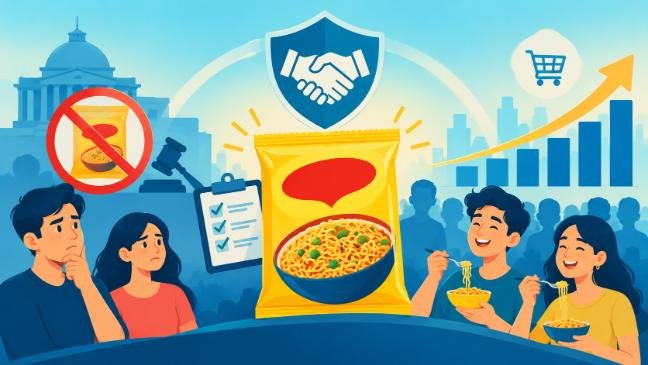
Poor corporate communication is dangerous See how mastering maggi comeback turns ordinary brands into success.
Looking for a Shorter Overview?
AI Summary
Key Moments
Independent Testing Wins Regulatory Approval
Nestlé submitted samples to accredited labs, securing court‑ordered validation that cleared the product and lifted the ban.Snapdeal Flash Sale Drives Immediate Demand
A five‑minute online sale sold 60,000 noodle kits, demonstrating digital channels could relaunches the brand while stores restocked.Transparent Communication & Price Stability
Nestlé disclosed manufacturing details, kept affordable pricing, and engaged everyday consumers to rebuild trust after the crisis.Rapid Market Rebound Post‑Ban
Maggi reclaimed 57% of the noodle market and replaced ₹450 crore of inventory within six months, reflecting strong consumer demand.In May 2015, Indian food regulators banned Maggi noodles over concerns about lead levels in the product. Nestlé India then destroyed 30,000 tonnes of inventory, taking a significant financial hit.
The Maggi Comeback required the company to address the safety concerns and rebuild consumer trust. Its response offers lessons for businesses facing a serious crisis and trying to reconnect with customers.
How Brands Excel at Partnering With Retailers During a Maggi Comeback
Government regulators questioned Nestlé’s original laboratory results, so the Bombay High Court ordered independent testing. Nestlé submitted Maggi samples to authorized laboratories accredited by the National Accreditation Board. The test results supported the product’s safety, and the court later lifted the ban.
Independent testing played an important role in the Maggi Comeback by giving consumers external evidence to consider. During a product-safety crisis, transparent testing can help a company address concerns and rebuild trust. After the government ban was lifted, many retail stores had no Maggi stock available. Nestlé partnered with online retailer Snapdeal to reach customers quickly through a digital sales channel.
As part of the Maggi Comeback, Snapdeal reportedly sold 60,000 noodle kits in five minutes. The online flash sale helped Nestlé reconnect with eager customers while physical stores restocked, showing how digital platforms can support a product relaunch. During the ban, legal cases were filed against several Bollywood actors associated with Maggi. When Nestlé restarted its marketing, it shifted away from celebrity endorsements and featured everyday consumers instead.
As part of the Maggi Comeback, the “We Miss You Too” campaign shared videos of mothers talking about the product’s safety. Using familiar voices and nostalgic stories helped the brand reconnect with consumers through a more personal approach. After taking a major financial hit during the noodle ban, Nestlé India kept Maggi’s prices unchanged during the Maggi Comeback. This helped preserve the product’s affordability for middle-class customers, including students looking for an inexpensive snack.
By keeping prices accessible, the company aimed to maintain customer loyalty and encourage repeat purchases, even while accepting temporary pressure on profits. During the early weeks of the ban, Nestlé’s silence left customers uncertain and made it easier for rumors to spread. The Maggi Comeback addressed this communication gap by sharing clearer information with the public.
The company explained its manufacturing processes and provided details about product safety, including lead levels. By communicating openly with customers and providing accurate information, businesses can reduce confusion, respond to concerns, and help prevent unnecessary panic.
During the five-month ban, rival noodle brands gained sales while Maggi was off the market. After the ban ended, Nestlé India had to rebuild its presence through the Maggi Comeback.
Nielsen reported that Maggi regained 57% of the noodle market within six months. Nestlé India also reported replacing ₹450 crore worth of inventory. The recovery showed how strong customer demand and an effective relaunch helped the brand return to stores after a major crisis.
A successful Maggi Comeback also depends on clear communication with customers, regulators, and other stakeholders. Rather than responding to health concerns with silence or defensive statements, companies can share verified test results and allow independent experts to review their manufacturing processes.
This kind of transparency can address rumors, reassure regulators, and help rebuild public trust over time. Recovering from a regulatory setback requires more than a temporary public relations response. Companies need to maintain strong quality controls and communicate openly about their supply chains and manufacturing practices.
Also read: Why Does Product Retirement Become Difficult for Established Brands?
During the Maggi Comeback, Nestlé India shared updates about its manufacturing processes and invited public scrutiny of its facilities. By demonstrating an ongoing commitment to food safety, businesses can rebuild trust, protect their reputations, and support long-term stability.
Loved this article? Read more insightful articles on Brand Custodian.
–Written by Rajnish Kumar, a copywriter and strategist with a background in fast-paced journalism, who explores the gap between what brands promise and how consumers actually behave.