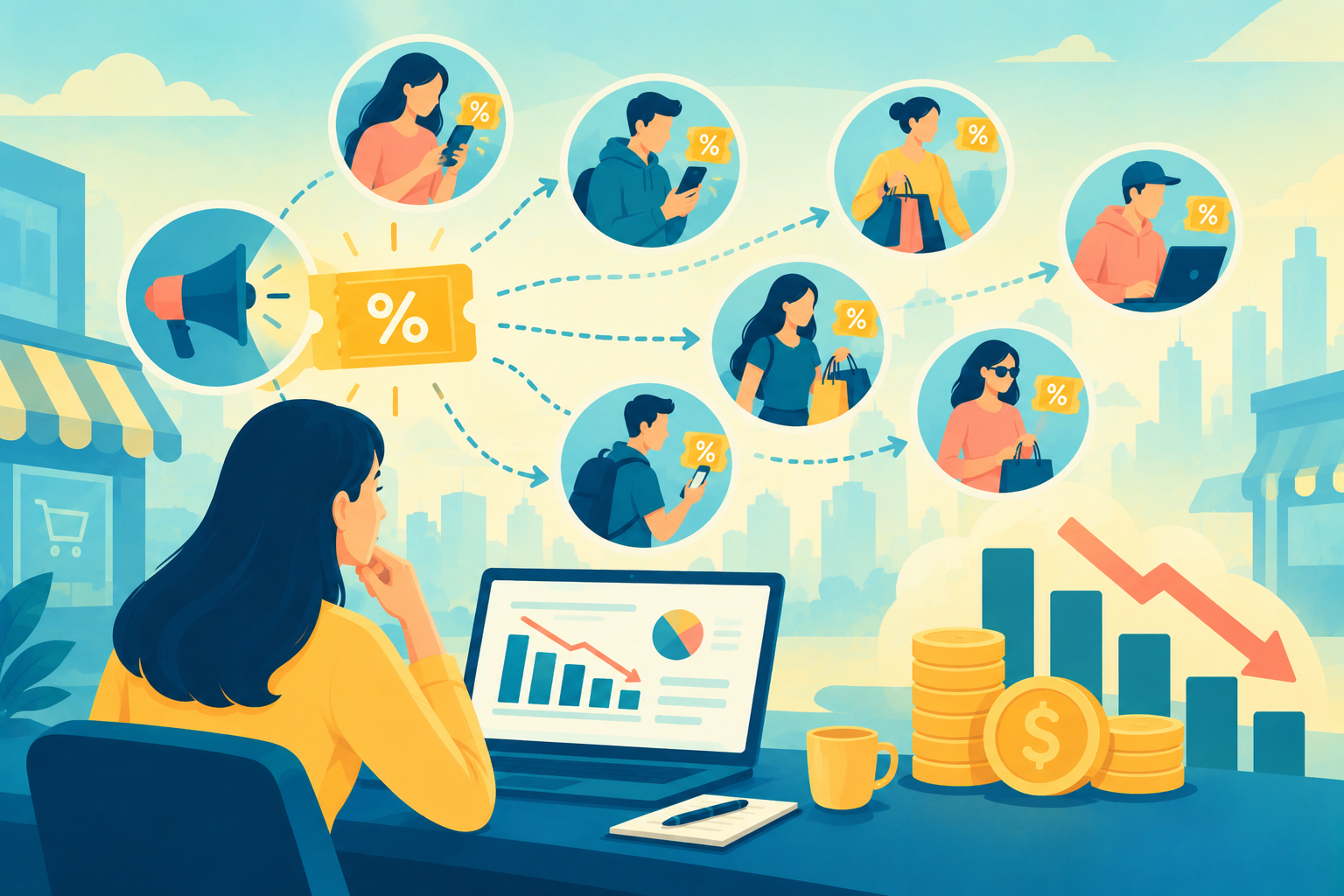
Reckless promotions are dangerous See how mastering promotional leakage turns ordinary stores into success.
Looking for a Shorter Overview?
AI Summary
Key Moments
Discounts Reach Unintended Customers
Loyal buyers discovering and using new customer-only discount codes costs businesses revenue without driving new sales.Stacked Discounts Create Losses
Customers combining multiple promotions can push product prices below manufacturing cost, turning sales into actual losses.Multi-Account Exploitation
Individuals creating fake accounts to claim multiple free products leads to significant inventory costs through promotional leakage.Massive Financial Impact
Promotion abuse and coupon exploitation cost retailers approximately $89 billion annually in lost revenue and margin erosion.Retailers often use coupons to attract shoppers looking for a better deal. But when discounts reach customers who were not intended to receive them, the business can lose revenue without gaining additional sales. This is known as Promotional Leakage. Understanding how Promotional Leakage happens can help businesses protect their promotional budgets, manage discounts more effectively, and preserve profits.
How Brands Don’t Give Discounts To Loyal Buyers During Promotional Leakage
Marketing teams often create special discounts to attract new customers. For example, a clothing store might email first-time shoppers a 20% off code. But if loyal customers find and use the code, the store gives discounts to people who would have paid full price. This is an example of Promotional Leakage.
Bain & Company and Pricefx estimate that industrial businesses lose, on average, more than 6% of their revenue to off-invoice discounts and other forms of discount leakage. To limit this loss, businesses can set clear eligibility rules and restrict who can use each promotional code.
A shoe company might give a private discount code to a creator, who then shares it publicly. Coupon websites can quickly spread the code, allowing far more shoppers to use it than the company intended. This kind of Promotional Leakage can lead to unexpected costs.
For example, the company may plan for 100 discounted orders but end up receiving 10,000. To prevent this, businesses can set redemption limits, expiration dates, or other restrictions on each coupon code.
Manufacturers often offer wholesale discounts to supermarkets with the expectation that retailers will pass some of the savings on to shoppers. But if a soap company gives a supermarket a discount and the store keeps its regular retail prices, the retailer gains extra margin without increasing sales.
This is a form of trade Promotional Leakage. To ensure discounts lead to the intended results, manufacturers should set clear terms with retailers and agree on how promotional savings will be used.
Online retailers sometimes offer several discounts at once, such as holiday and student offers. If a shopper can apply both to the same laptop, the combined reduction may push the final price below the product’s manufacturing cost. This kind of Promotional Leakage can turn a sale into a loss.
Retail and e-commerce analysts warn that automated pricing systems can erode margins when they allow customers to combine multiple promotions. Businesses can reduce this risk by programming their checkout systems to limit which offers can be combined and clearly explaining the rules to customers.
Restaurants sometimes mail paper coupons to residents in a specific area. But if someone uploads a photo of the coupon online, people from other cities may print and use it. This geographic Promotional Leakage can make it difficult for the restaurant to measure how well its local campaign performed.
To track redemptions more accurately, businesses can use unique barcodes on each coupon. This helps them identify where offers are used and whether they reach the intended audience.
A cosmetics company might offer a free lipstick to new email subscribers. But if one person creates multiple accounts to claim several free products, the promotion can lead to Promotional Leakage and unexpected inventory costs.
Mastercard estimates that promotion abuse and coupon exploitation cost retailers around $89 billion each year. These practices include creating multiple fake accounts and combining discount codes in ways that bypass a retailer’s intended rules. Businesses can reduce this risk with safeguards such as account verification, redemption limits, and fraud detection tools that flag suspicious activity.
Also read: Can Product Rationalisation Make a Business More Competitive?
Businesses can reduce Promotional Leakage by using one-time coupon codes and checking their validity at checkout. Instead of relying on a universal code that can be shared widely, companies can issue unique offers linked to verified customer accounts. These safeguards make it harder to misuse promotions, help ensure discounts reach the intended shoppers, and protect profit margins.
Loved this article? Read more insightful articles on Brand Custodian.
–Written by Rajnish Kumar, a copywriter and strategist with a background in fast-paced journalism, who explores the gap between what brands promise and how consumers actually behave.