Discover how Netflix turned password sharing into a pricing strategy to drive subscriber growth, unlock revenue and reshape streaming.
Looking for a Shorter Overview?
AI Summary
Key Moments
Subscriber Decline Triggers Strategy
Netflix recorded its first subscriber drop in a decade in 2022, forcing a strategic shift away from ignoring password sharing.Paid Sharing Rollout
Netflix began testing paid‑sharing options in Latin America, allowing extra members for a fee and monetizing previously free access.Ad‑Supported Tier Launch
A lower‑price, ad‑supported subscription was introduced to give price‑sensitive users an affordable alternative to full pricing.Customer Backlash Risk
Strict enforcement created tension with users accustomed to sharing, risking churn and negative sentiment.In 2022, Netflix reported its first subscriber decline in more than a decade, putting pressure on the company to rethink its growth strategy. Password sharing became a significant part of that conversation. Instead of treating it as a minor inconvenience, Netflix saw an opportunity to turn existing viewers into paying customers. Its approach was not simply about stopping people from sharing passwords. It was about changing how customers accessed the service, how they paid for it, and how the company generated revenue from its audience.
From a Subscriber Problem to a Revenue Opportunity
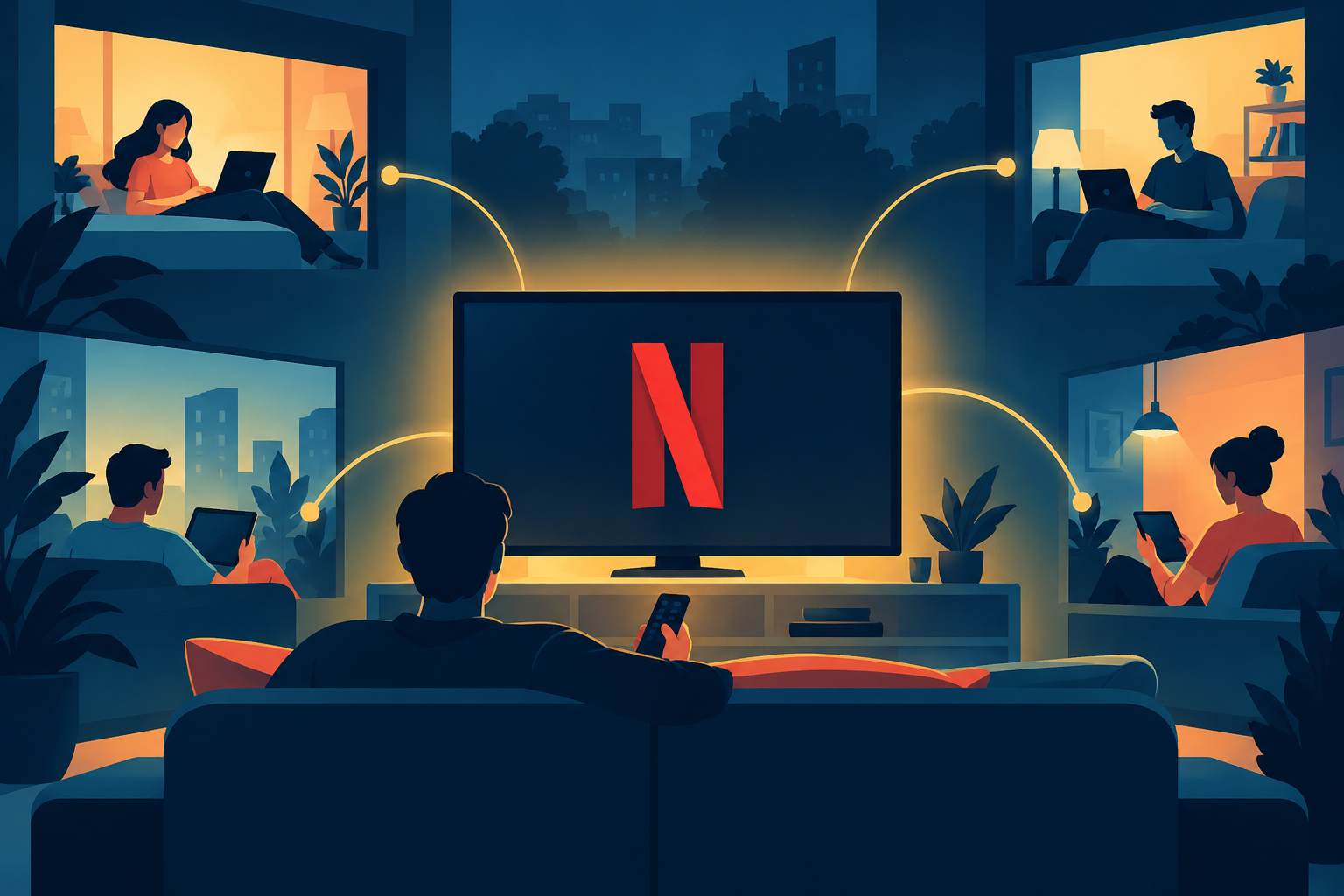
The scale of password sharing made the opportunity difficult to ignore. In 2022, Netflix estimated that more than 100 million households worldwide were watching through accounts they did not directly pay for. While these viewers represented an audience for the platform, they did not necessarily contribute additional subscription revenue. Netflix argued that revenue lost through account sharing limited its ability to invest in new films and television shows.
The challenge was that password sharing had become part of the customer experience. Many people saw it as a reasonable way to split costs with family members or friends, rather than a practice that required correction. A sudden, aggressive crackdown could therefore frustrate existing subscribers and push some towards competing streaming services. Netflix needed a strategy that could encourage more people to pay without making the service feel inaccessible.
Making Access a Paid Choice
Netflix began testing paid-sharing measures in selected Latin American markets in 2022 before expanding its approach more widely. The strategy introduced a clearer distinction between people sharing an account within a household and those accessing it from elsewhere. Depending on the market and plan, subscribers could pay to add an extra member, while people sharing an account could also transfer their profiles to their own subscriptions. This gave Netflix a way to monetise viewing that had previously generated no separate subscription payment.
The pricing logic was straightforward. Rather than requiring every additional viewer to buy a completely separate subscription immediately, Netflix created a paid option for certain account-sharing arrangements. At the same time, it made individual accounts the alternative for people who no longer wanted to share. The company was effectively placing a price on access that many customers had previously received for free.
Pairing Enforcement with a Lower-Priced Plan
A key part of the strategy was giving customers another way to access Netflix without paying for its more expensive, ad-free plans. In November 2022, the company introduced an ad-supported subscription tier in selected markets. This created a lower-priced entry point for viewers who were unwilling or unable to pay for a standard subscription. Paid sharing and advertising were different initiatives, but together they gave Netflix more ways to generate revenue from its audience.
The results initially suggested that the strategy was working. In the second quarter of 2023, Netflix added approximately 5.9 million net subscribers globally, following the wider rollout of paid sharing. The company also benefited from its ad-supported offering. However, these developments should not be attributed to the password-sharing crackdown alone. Subscription growth can also reflect content releases, marketing, pricing, and other changes in the streaming market.
The Cost of Changing Customer Expectations
The strategy came with a risk that extended beyond subscription numbers. Netflix had spent years building a brand associated with convenience and entertainment on demand. Its earlier acceptance of password sharing, including a widely circulated 2017 post saying that sharing a password was an expression of love, had helped make the practice feel normal to many users. Tightening the rules therefore created a disconnect between the brand’s earlier messaging and its new commercial priorities.
Also read: How Did McCain Make Frozen Potatoes Feel Like More Than a Convenience Food?
Consumer reaction highlighted the difficulty of changing an established habit. Some users accepted the need to pay for their own accounts, while others criticised the restrictions or considered cancelling their subscriptions. Research published by Infegy in 2023 also highlighted negative sentiment and potential churn risks around the crackdown. This illustrates an important point for marketers: a pricing strategy can improve monetisation while still creating friction with customers. The long-term outcome depends on whether customers continue to believe the service offers enough value to justify the cost.
For Netflix, the bigger challenge was balancing revenue growth with customer loyalty. Restricting access could encourage more people to subscribe, but it could also make the platform less attractive to price-sensitive viewers who had grown accustomed to sharing accounts. The availability of competing streaming services made that trade-off more significant.
Ultimately, Netflix turned password sharing into a pricing strategy by identifying an existing audience that was not fully contributing to subscription revenue, introducing paid access options and expanding its lower-priced, ad-supported offering. The move demonstrated how a business can rethink an established customer behaviour and build new revenue opportunities around it.
The lesson for other brands is not simply to start charging for something customers once received for free. It is to understand why that behaviour exists, communicate the change clearly, and offer customers a compelling reason to stay. Netflix showed that pricing can be a growth lever, but its success depends on whether customers continue to see value in what they are paying for.
– Written by Saad Rashid, an experienced journalist with extensive experience across both print and digital media. He has worked with various publications in India and internationally and has reached millions of readers through his thought-provoking articles.
Enjoyed this article? Read more here.