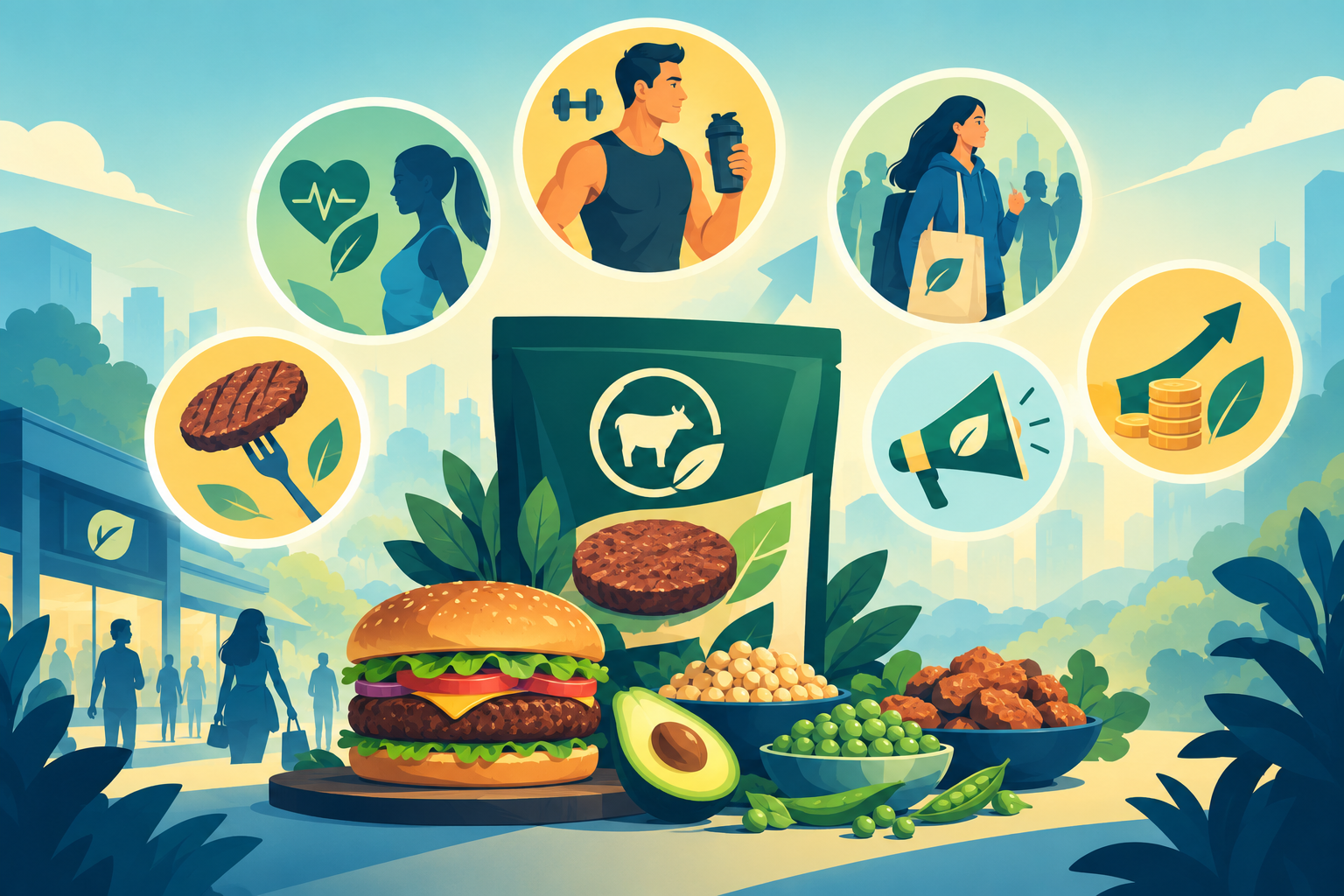
Ignoring clean ingredients is dangerous. See how mastering Beyond Meat turns ordinary portfolios into an unstoppable success.
Looking for a Shorter Overview?
AI Summary
Key Moments
Financial decline and pivot needed
Beyond Meat saw an 8% revenue drop in Q2 2026, prompting a strategic shift toward high‑protein, health‑focused products.Recipe overhaul for health focus
Replaced coconut oil with avocado oil, added fava beans and peas to deliver 21 g protein per burger and earned Diabetes Association certification.Premium product line launched
Introduced Beyond IV, a higher‑priced line using costly avocado oil to improve margins and target health‑conscious, flexitarian shoppers.Marketing shift to nutrition messaging
Ads now highlight protein content and personal health benefits, moving away from earlier environmental appeals to attract a broader audience.Grocery stores offer a growing range of plant-based foods, including burger patties for shoppers looking for alternatives to meat. Some earlier plant-based burgers used vegetable oils that customers were concerned about, prompting companies to revisit their recipes.
Beyond Meat has updated its products as consumer expectations have changed. Understanding how the company develops and markets its plant-based protein can offer useful lessons for businesses looking to meet demand while avoiding costly missteps.
How Brands Stop Financial Losses at Beyond Meat
Beyond Meat has faced declining sales as some shoppers have become less willing to buy its plant-based burgers. The company reported revenue of $68 million for the second quarter of 2026, an 8% decrease from the previous year.
To address this decline, managers are adjusting the products to better meet customers’ expectations, including their interest in healthy protein options. By tracking financial results and responding to changing preferences, Beyond Meat can make more informed decisions about its products and future growth.
Food companies continually test new ingredients to improve their products. Beyond Meat, for example, replaced coconut oil in some plant-based burgers with avocado oil. The burgers contain 21 grams of protein from fava beans and peas.
The company says the updated recipe aligns with health-focused standards, and the packaging highlights its certification from the American Diabetes Association. These changes may appeal to shoppers who read ingredient labels closely and are looking for plant-based options with a different nutritional profile.
Vegan shoppers make up only part of the market, so Beyond Meat also targets flexitarian customers, who sometimes eat meat but want more plant-based options. Its burgers contain no cholesterol and offer a high-protein alternative, which may appeal to shoppers seeking to reduce their cholesterol intake.
Research firm Grand View Research estimates that the global plant-based food market has reached $22.1 billion (projected to reach $52.6 billion by 2033). By appealing to health-conscious flexitarian shoppers as well as vegans, Beyond Meat can reach a broader customer base and help retailers sell more products.
Marketing teams regularly update their digital advertising to reflect what matters most to customers. While Beyond Meat’s earlier campaigns focused on environmental benefits, its newer ads emphasize personal health and nutrition.
The advertisements clearly display the burgers’ protein content, including 21 grams per serving. This may appeal to shoppers looking for high-protein foods to support their fitness goals, encouraging them to add the product to their online cart and complete the purchase.
Higher-quality ingredients can cost more. Avocado oil, for example, is more expensive than coconut oil, so Beyond Meat has introduced a premium product line called Beyond IV at a higher price.
Health-conscious shoppers may be willing to pay more for products they see as offering added nutritional benefits. This premium pricing can help Beyond Meat improve its profit margins and offset higher ingredient costs, while giving retailers a higher-priced option to offer customers.
Revitalizing Beyond Meat also means making its ingredient labels clear and easy to understand. By simplifying ingredient lists and avoiding artificial additives, plant-based brands can help shoppers feel more confident about what they are buying.
Highlighting familiar ingredients, such as yellow peas, fava beans, and avocado oil, on the front of the package can build trust and ease skepticism. Greater transparency may encourage hesitant customers to try the product and return for more.
Beyond Meat offers more than burger patties. Its product range also includes plant-based steak bites and chicken-style pieces, giving customers additional high-protein meal options.
Also read: How Is Uber Eats Expanding Beyond Food Delivery?
For example, an athlete can quickly prepare plant-based chicken after a workout. By offering convenient products for different meals and routines, Beyond Meat can appeal to a wider range of shoppers and create new opportunities for sales.
Loved this article? Read more insightful articles on Brand Custodian.
–Written by Rajnish Kumar, a copywriter and strategist with a background in fast-paced journalism, who explores the gap between what brands promise and how consumers actually behave.