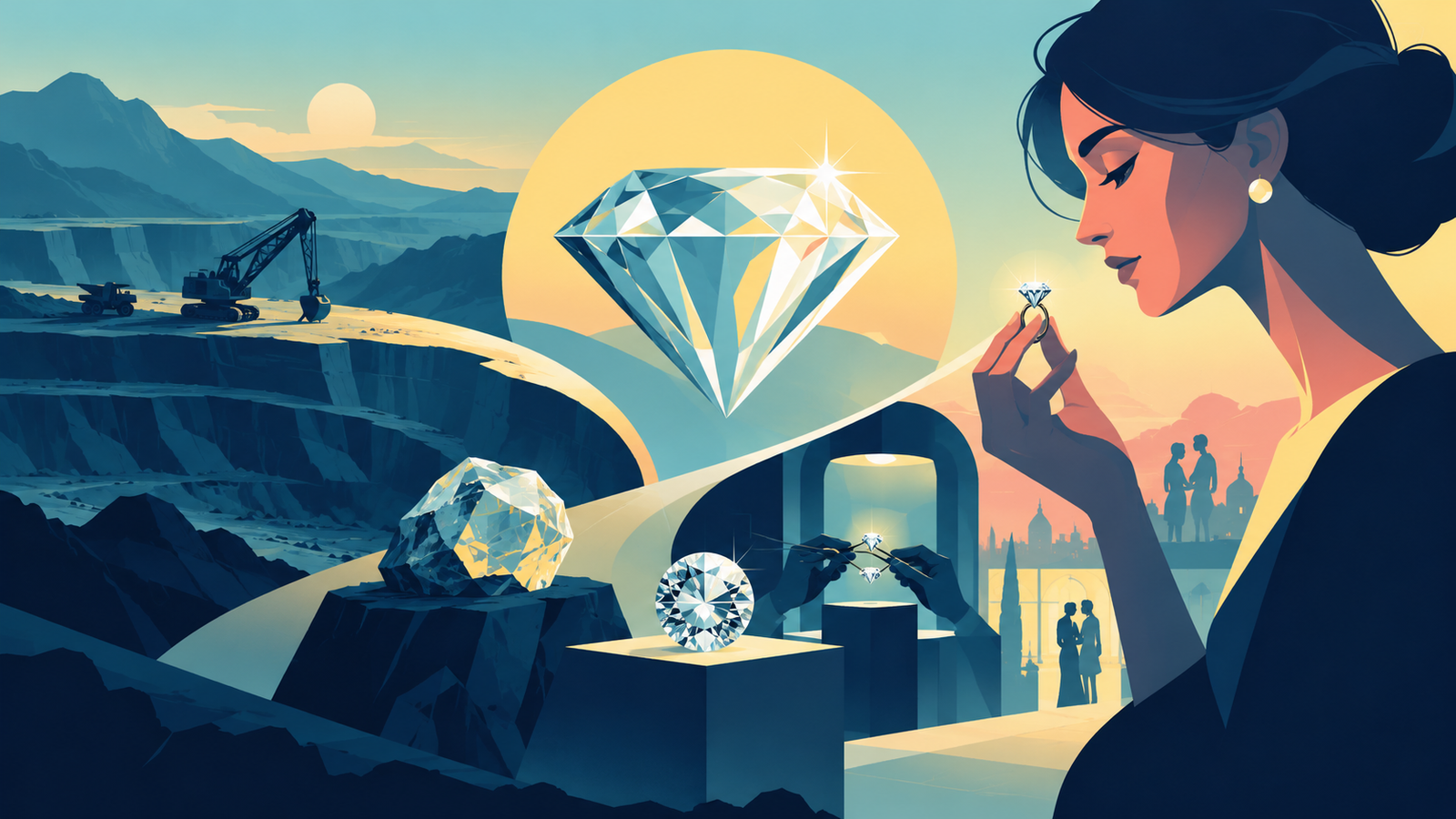
Discover how De Beers uses Origin Marketing, provenance and storytelling to renew consumer desire for natural diamonds in a changing market.
Looking for a Shorter Overview?
AI Summary
For decades, De Beers has sold consumers more than diamonds. It has sold the idea of everlasting love, commitment, and milestones worth remembering. Its iconic “A Diamond Is Forever” campaign helped establish diamonds as the preferred choice for engagement rings across many markets, demonstrating how marketing can shape consumer expectations rather than simply respond to them. Today, however, the diamond industry faces a different challenge. Lab-grown diamonds offer an alternative at lower prices, while changing consumer priorities are putting greater emphasis on transparency and value. This is where Origin Marketing enters the picture, giving De Beers a new way to communicate what makes natural diamonds distinctive.
How Is Origin Marketing Helping De Beers Build Desire for Natural Diamonds?
De Beers understands that a product’s appeal does not always come from its physical attributes alone. Its earlier marketing connected diamonds with romance and permanence, turning a precious stone into a symbol of lifelong commitment. The 1947 “A Diamond Is Forever” slogan, created by copywriter Frances Gerety, became one of the most influential examples of this approach. As Sotheby’s explains in its account of the campaign, the message helped establish a lasting association between diamonds and enduring love.
But consumer expectations have evolved, and the same emotional appeal may not be enough to sustain demand. When lab-grown diamonds offer a visually similar alternative at a lower price, natural diamonds need a clearer point of differentiation. De Beers is responding by bringing the story of a diamond’s origin, formation, and journey closer to the consumer. Rather than focusing exclusively on what a diamond represents, the brand is also highlighting what makes the stone itself distinctive.
This is the central idea behind Origin Marketing. It connects a product to its source and the story of how it came into existence, giving consumers another reason to value it. In De Beers’ case, the emphasis is on natural diamonds formed through geological processes over billions of years, alongside greater visibility into where individual stones come from.
Making Provenance Part of the Luxury Experience
In May 2024, De Beers announced its five-year Origins strategy, which included plans to revitalise desire for natural diamonds through renewed category marketing, stronger retail partnerships and greater investment in provenance technology. The strategy reflects the company’s recognition that the industry needs to connect with a new generation of consumers while helping them distinguish natural diamonds from lab-grown alternatives.
One important part of this approach is provenance, or the ability to establish where a diamond originated and trace relevant information about its journey. De Beers’ Tracr platform uses blockchain technology to register diamond information and support traceability. Its consumer-facing ORIGIN experience also aims to connect natural diamonds with their individual stories, bringing information about their origins into the jewellery-buying process. These initiatives make provenance more tangible than a general claim about rarity.
The marketing opportunity here is significant. Luxury consumers often value more than appearance or functionality. Craftsmanship, heritage, exclusivity and the story behind an object can all contribute to its perceived worth. By bringing a diamond’s journey into the buying experience, De Beers can give consumers additional context for understanding why a natural stone may command a premium.
However, traceability and storytelling are not interchangeable. A compelling origin story must be supported by credible information. Consumers are increasingly attentive to ethical sourcing and environmental responsibility, so brands need to communicate clearly about what they can verify rather than relying on emotional language alone.
Also read: Can Mental Accounting Explain Why Consumers Spend Differently Across Categories?
Why Origin Marketing Matters in a Changing Diamond Market
De Beers’ challenge is not simply to remind people that natural diamonds are rare. It must explain why that rarity matters to consumers today. Its historical advertising established an emotional connection, while its newer approach adds provenance, geological history and product differentiation to the conversation. Together, these elements offer a broader reason to consider a natural diamond beyond its appearance or traditional association with romance.
There is also a lesson here for other luxury brands. Origin Marketing can help make a product’s background part of its value proposition, especially when competitors offer similar-looking alternatives. Whether it is a gemstone, a handcrafted product or a premium material, the story of where something comes from can strengthen its appeal when the story is specific, credible and relevant to the buyer.
Ultimately, De Beers is building on a familiar marketing principle while adapting it to a new market reality. “A Diamond Is Forever” made the meaning of a diamond memorable. Origin Marketing aims to make its beginnings just as meaningful. Whether this strategy can revitalise long-term demand will depend on how effectively De Beers turns provenance into a genuine consumer benefit, rather than simply another luxury marketing message.
– Written by Saad Rashid, an experienced journalist with extensive experience across both print and digital media. He has worked with various publications in India and internationally and has reached millions of readers through his thought-provoking articles.
Enjoyed this article? Read more here.