How brands can build new consumer categories by solving everyday problems consumers may not realise they have, like hard water.
Looking for a Shorter Overview?
AI Summary
Key Moments
Hard Water's Hidden Impact
Dissolved calcium and magnesium cause scaling, hair and skin problems, and appliance damage.Consumer Misdiagnosis
People treat symptoms with cosmetics or repairs instead of addressing the underlying water quality.Information Gap
Lack of consumer‑friendly research on household water quality hampers awareness and brand education.Brand Opportunity
Successful brands must educate first, turning invisible problems into visible market opportunities.Sometimes, a problem can become so widespread that it becomes a way of life, and no one thinks to question it. The problem remains invisible unless someone first creates awareness around it.
This has been the story behind the problem I have been working on for more than seven years: hard water, a condition that millions of Indian households are exposed to. Hair that feels different after moving to a new city for a job, an itchy or dry scalp, or unexplained changes in hair health are often ignored or addressed through cosmetic products. The common thread is that the water itself is frequently overlooked.
With a growing population, rapid urbanisation and increasing dependence on groundwater, exposure to hard water has become a growing concern in many parts of India. Yet awareness of it as a household issue remains relatively limited. Conversations around water quality are largely centred on drinking water, something clearly reflected in the widespread adoption of RO purifiers in Indian homes. But the water used for bathing, washing and other household activities is often conveniently ignored, even though it can have an equally important role in our everyday lives.
Hard water is primarily caused by the presence of dissolved calcium and magnesium salts. These minerals can enter water as it passes through rocks and soil containing them. The effects of hard water can extend across several aspects of daily life. It can cause mineral scaling on taps and showerheads, leave deposits on bathroom surfaces, and affect how soaps and shampoos perform. For some people, it can also contribute to dry or uncomfortable skin and hair. In homes, mineral scaling can accumulate inside geysers, washing machines, and other appliances that regularly come into contact with water, potentially affecting their performance and maintenance over time.
Yet consumers often respond to each symptom separately. They may change their shampoo, opt for an expensive hair treatment, or continuously try new moisturisers in the hope that one of them will work. Appliance maintenance is often ignored until the problem becomes visible, sometimes only when an appliance starts performing poorly or breaks down. What is uncommon is taking a step back and asking: Could there be a common root cause behind some of these issues?
One reason is the information gap and the lack of accessible, up-to-date research translating household water quality into everyday consumer experiences. There is considerable information available about drinking-water safety, but far less consumer-friendly research and communication around the water people use for bathing, washing and other daily activities.
This creates an unusual challenge for businesses entering the category. When consumers already understand a problem, brands compete primarily on price, performance, distribution and trust. But when the problem itself is poorly understood, the first task is different: education comes before conversion.
Also read: Why Small-Business Owners Need Fewer Growth Ideas, Not More
Building a brand in such a category therefore means helping consumers recognise something they may have previously considered normal. It requires explaining the science in simple language, encouraging people to understand the water in their homes, and separating established evidence from exaggerated claims. It also requires more research into how different water conditions affect households over time.
This may be one of the more interesting directions in consumer brands today: building businesses not simply around products, but around previously overlooked problems.
Hard water illustrates this particularly well. The opportunity is not necessarily created by inventing a new consumer need. It comes from making an existing, everyday experience more visible and understandable.
As households become increasingly conscious of the quality of the resources they use every day, water may gradually move beyond being viewed simply as something that needs to be safe to drink. Consumers may begin asking a broader question: What kind of water are we living with every day?
Sometimes, the beginning of a new consumer category is simply helping people question the status quo.
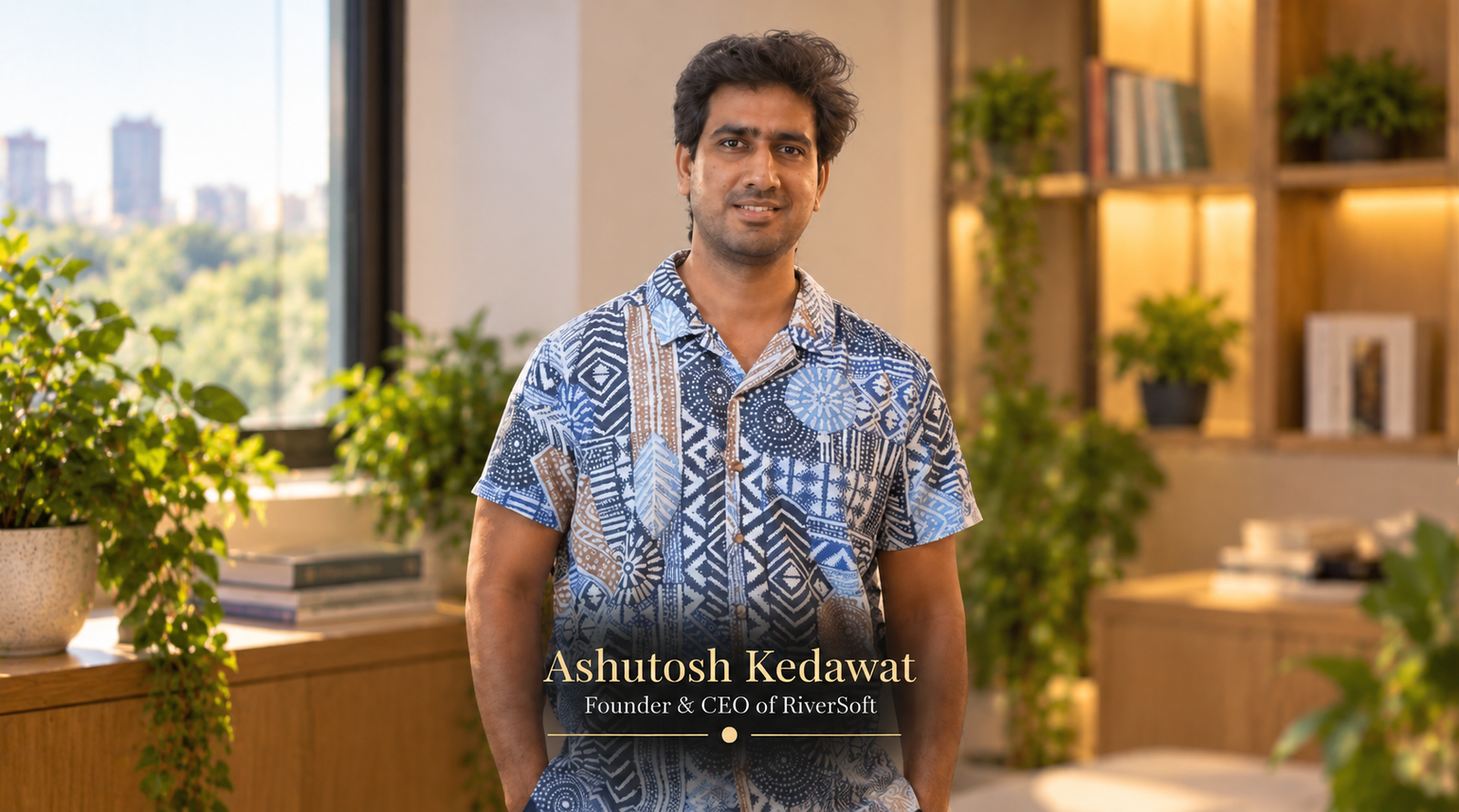
– Written by Ashutosh Kedawat, Founder & CEO of RiverSoft. An IIT Delhi and IIM Ahmedabad alumnus, Ashutosh founded RiverSoft after seeing firsthand how hard water affected his family, turning a personal problem into a mission to build practical, affordable water filtration solutions for Indian homes. Today, he is focused on growing RiverSoft into a globally recognised brand for specialised water purification.