Are your ads pushing buyers away? Discover how brilliant marketing frequency creates an unstoppable brand advantage.
Looking for a Shorter Overview?
AI Summary
Key Moments
Over‑frequency breeds irritation
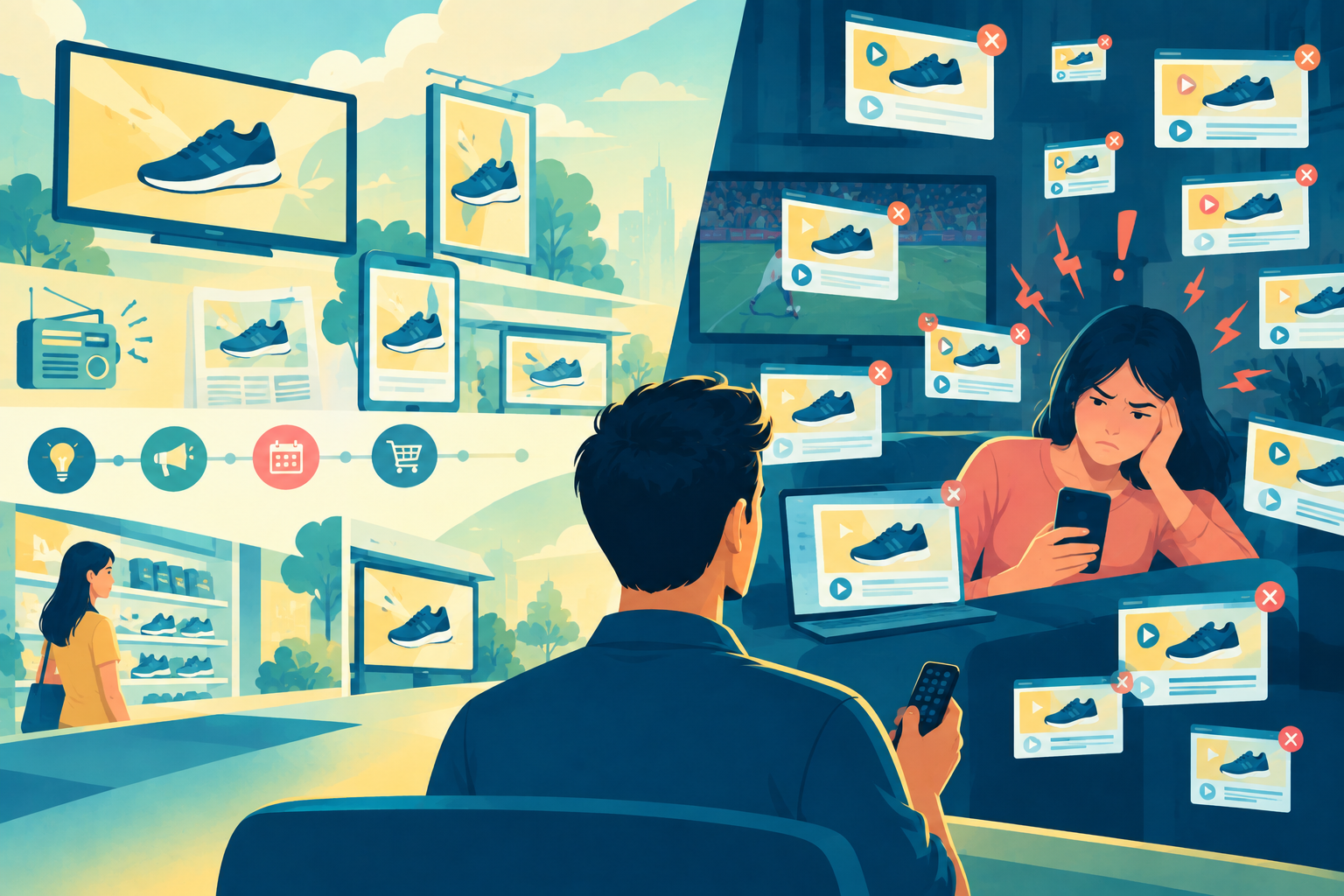
Showing the same ad many times in a short period turns viewers angry and drives them to mute or block the brand.Balanced spacing builds recall
Repeating a message at spaced intervals across channels reminds shoppers without overwhelming them.Consumer backlash and blocking
Aggressive ads cause buyers to install blockers or choose competitors to regain peace of mind.Respect quiet time for higher sales
Brands that honor buyer attention by spacing ads collect more revenue than those that flood the screen.Watching a cricket match on television often means seeing the same car advertisement during every break. By the third time the red car appears on screen, viewers become very irritated, grab the remote, and change the channel. This physical anger shows the real problem with high marketing frequency. A company owner thinks that running the same ad many times in a short period makes buyers remember the brand name.
Instead, too much marketing frequency can make buyers completely dislike the physical product. Showing a video twice reminds a person to buy; showing it twelve times in one evening just creates intense irritation. A smart seller must find the exact physical limit before the buyer decides to switch off the ad before finishing.
Finding the Right Marketing Frequency for the Buyer
Repeating a simple message is a basic rule of selling. If a shopkeeper tells a shopper about a new cold drink only once, the shopper may forget its name before reaching the cash counter.
Proper marketing frequency helps fix this forgetfulness. A daily shopper sees a printed paper poster on a street wall on Monday, hears the radio sound on Tuesday, and finally buys the glass bottle on Wednesday.
However, modern online sellers take this physical rule too far. A shopper searches for a pair of black leather shoes on his mobile phone. For the next three weeks, every website he opens shows a picture of those exact same black shoes.
This aggressive marketing frequency doesn’t make him want the shoes; it annoys him instead. The constant push of the ad on his phone screen feels like a shop worker who won’t stop talking. The shopper actively refuses to buy the shoes just to stop the noise on his screen.
Companies spend millions of rupees on ad agencies just to show their videos. They set the software to play the same washing powder ad to the same mother ten times a day. The factory owner thinks this repeated exposure guarantees a sale. Instead, the mother pays for special software to block all videos completely.
This block happens because the brand ignored the buyer’s daily comfort. A tired passenger travelling on a crowded bus just wants to listen to quiet music through her earphones. When a loud advertisement interrupts her song five times in thirty minutes, bad marketing frequency destroys all trust.
She remembers the brand name, but only with pure anger. The next time she walks into a physical grocery store, she deliberately picks a different packet from the shelf to avoid the brand that interrupted her quiet music.
A successful business knows how to space its messages over many months. Instead of pushing twenty videos in a single day, a wise seller shows one simple picture every few weeks. This slow, quiet method uses marketing frequency without making the buyer angry. The buyer gradually learns the brand name without feeling forced to watch the screen.
Good selling is like a polite physical conversation in a real shop. A polite shop owner says hello once when a shopper walks through the glass, then stands back. He does not tap the shopper on the shoulder every two minutes while the shopper looks at the products.
Also read: Why Does Category Familiarity Make Marketing Harder?
Proper marketing frequency works the same way. It gently reminds the shopper that the physical item is on the flat shelf, and then it stays completely quiet. A brand that respects the buyer’s quiet time always collects more money than a brand that never stops playing loud videos.
Loved this article? Read more insightful articles on Brand Custodian.
–Written by Rajnish Singh, a copywriter and strategist with a background in fast-paced journalism, who explores the gap between what brands promise and how consumers actually behave.