Stop chasing every modern trend. Learn how Royal Enfield used brand heritage to save a failing factory and dominate the market.
Looking for a Shorter Overview?
AI Summary
Key Moments
Factory Crisis and Turnaround
In 2000 Royal Enfield's factory was losing money and near closure, prompting radical change.Heritage Strategy
Siddhartha Lal preserved the classic design, fixing only internal parts while keeping the old metal shape and signature Madras stripe.Product Identity
The brand kept visual cues like the round headlight, loud exhaust, and analog speed needle to deliver an authentic heavy‑weight feel.Sales Revival
By 2014 the company sold over three lakh motorcycles annually, turning brand heritage into a profitable growth engine for a new generation.Paying more than two lakh rupees for a Royal Enfield bike that looks like it belongs in 1950 seems completely crazy. But a strong brand heritage makes young boys wait for several months just to bring this heavy metal machine home.
Today, regular college students proudly ride that loud motorcycle on the main road that looks exactly like the one their grandfather rode. This choice is physical because ‘brand heritage’ simply means a factory uses its old history to sell new items today.
The company did not try to make a light bike with new electronics. The factory kept the old metal shape and the loud engine sound completely unchanged. A modern buyer wants the latest brake parts, but he also wants the same outside look.
How Brand Heritage Fixed A Failing Factory
In 2000, the Royal Enfield factory was losing money steadily. Its old cast-iron engines leaked black oil onto the floor, and the brakes often failed. Many office managers told the new boss, Siddhartha Lal, to shut the factory down or build cheap daily commuter bikes like everyone else.
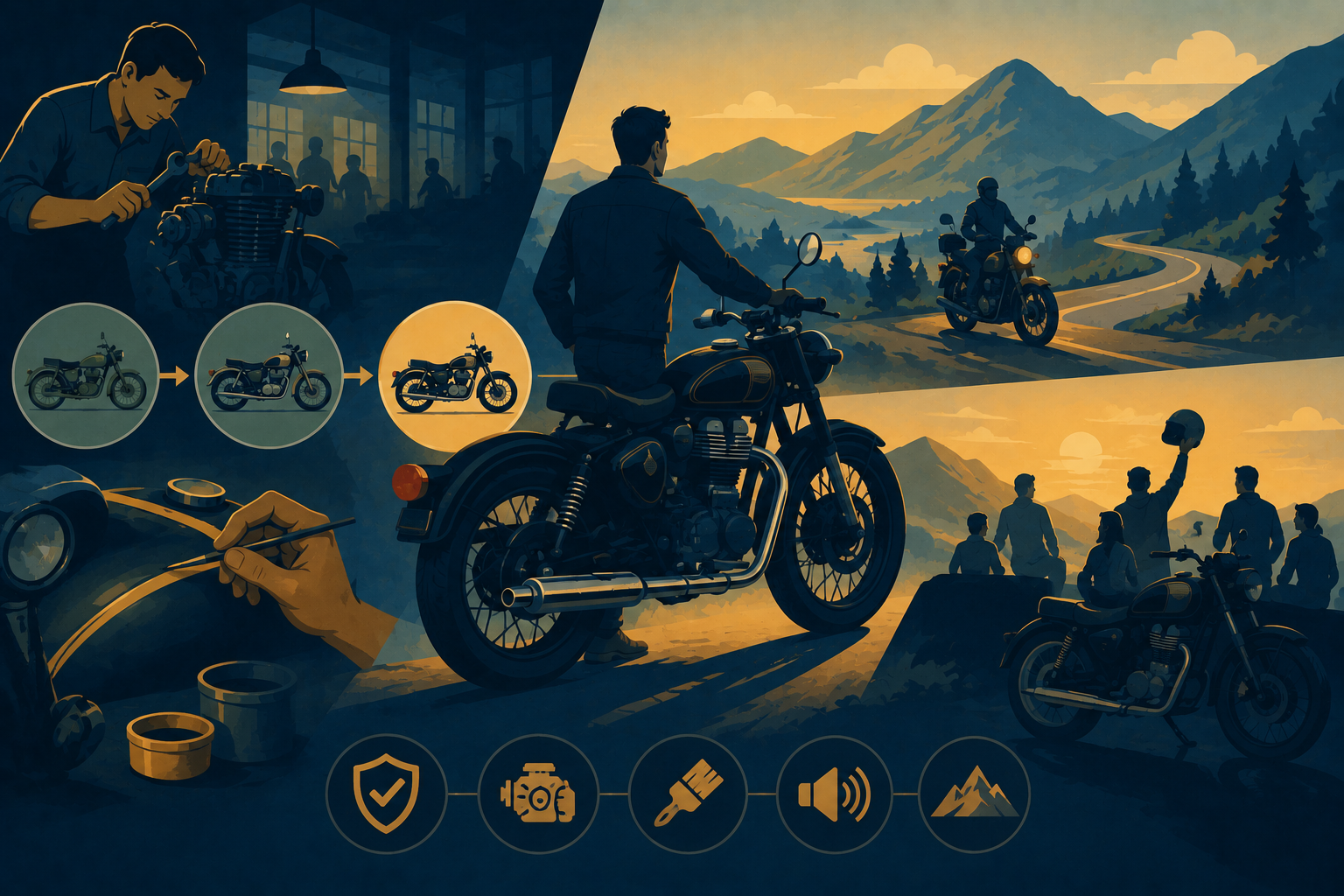
But Lal decided to use Brand Heritage to save the business. He told the factory workers to fix the engine’s internal parts so the bike would stop leaking oil, but he strictly instructed them not to change the metal shape on the outside.
A smart factory owner knows exactly which physical parts to keep. The factory in Chennai still pays workers to paint two thin golden lines on every black petrol tank with a special paintbrush.
This signature hand painting is called the ‘Madras stripe’, and it is a clear example of Brand Heritage on the factory floor. The makers kept the round glass headlight and the loud, thumping noise from the exhaust pipe. A Royal Enfield buyer wants that exact heavy, bold look and does not want a silent machine.
Very soon, many men began taking these heavy metal bikes on long trips to the cold mountains of Ladakh. The company did not spend money on boring television ads showing the bike stuck in normal city traffic. Instead, it showed mature men wearing thick leather jackets riding the old-looking bikes on mountain roads.
This direct action helped Brand Heritage grow around the simple idea of travelling far away. The old factory, which almost shut down in 2000, suddenly had long waiting lines at the shops. By 2014, the factory was selling over three lakh motorcycles a year, simply by selling an old-school heavy machine.
When a buyer walks into a modern bike showroom today, he sees bright colours and sleek bikes. But when he walks into an Enfield shop, he sees bare metal, thick black rubber, and a big, round machine.
True brand heritage happens when a business refuses to change its old design. The factory does not use a modern digital screen; it still uses a physical metal needle to show speed. The buyer knows the new engine inside will start easily every morning, but the outside metal still gives it the heavy, solid look of a classic army vehicle.
Today, the company brings in huge daily sales by selling this classic metal style to a brand-new generation. Many other companies try to copy that success by simply putting a fake old name on a cheap plastic item.
Also read: Crocs: How Brand Resurgence Turned an Unfashionable Product Into a Cultural Phenomenon
But strong brand heritage requires the physical item to feel solid and real in the buyer’s hands. The business proved that fixing the engine while keeping the old iron body is the best way to make buyers happily pay high prices today. A regular buyer feels proud when this heavy classic machine is parked outside his own house.
Loved this article? Read more insightful articles on Brand Custodian.
–Written by Rajnish Singh, a copywriter and strategist with a background in fast-paced journalism, who explores the gap between what brands promise and how consumers actually behave.