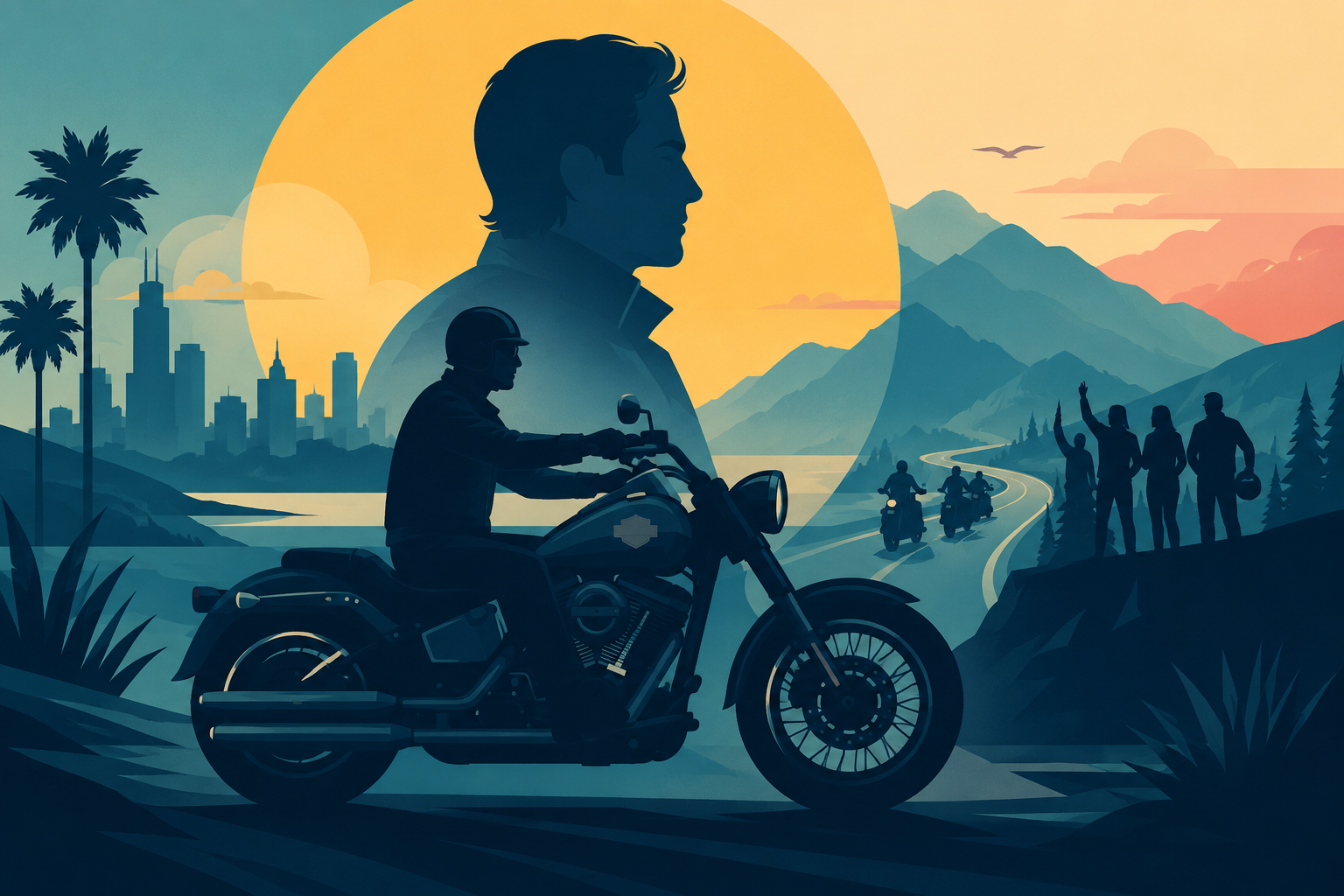
Harley-Davidson’s Brand Identity transformed a motorcycle into a powerful symbol of freedom, self-expression, community and lifestyle.
Looking for a Shorter Overview?
AI Summary
Key Moments
Near‑collapse and revival through heritage
Harley‑Davidson’s turnaround in the 1980s leveraged its storied past to reinvent the brand and avoid Japanese competition.Harley Owners Group builds global community
H.O.G., launched in 1983, turned riders into a worldwide network sharing events, gear and a common identity.Brand identity expands beyond motorcycles
Merchandise, customization and cultural experiences let owners express affiliation without owning a bike.Lesson on brand extensions
Straying too far from core identity risks diluting the brand’s distinctive meaning and eroding loyalty.A motorcycle is, at its most basic, a machine built to take you from one place to another. Harley-Davidson, however, has spent more than a century making its motorcycles mean something far beyond transportation. The brand has come to represent freedom, self-expression, rebellion and belonging. That is the power of a strong Brand Identity: when built consistently over time, it can turn a product into something people use to express who they are.
Harley-Davidson’s story is particularly interesting because its brand became stronger not by trying to compete purely on technology or specifications, but by embracing what made it different. At a time when Japanese motorcycle manufacturers were competing aggressively on engineering, efficiency and innovation, Harley chose another path. It leaned into its heritage, distinctive design, sound and emotional appeal.
How Harley-Davidson Built a Brand People Wanted to Belong To
Harley-Davidson’s modern brand story is closely linked to one of the company’s most difficult periods. By the 1980s, quality problems, financial pressure and competition from Japanese manufacturers had pushed the company close to collapse. Its revival involved significant improvements in manufacturing and quality, but there was also a recognition that the company possessed something competitors could not easily replicate: its heritage and mystique. Rather than imitate competitors, Harley chose to become the alternative.
That decision shaped its Brand Identity. The company retained the classic styling associated with Harley motorcycles and built around ideas such as freedom, individuality and the open road. These were not simply advertising messages. They became part of the experience surrounding the product. Harley-Davidson’s own current strategy still describes its purpose in terms of protecting and growing motorcycle culture, with freedom, self-expression, exploration and connectedness at its centre.
Perhaps the clearest example of this approach was the Harley Owners Group, or H.O.G., launched in 1983. Instead of treating customers simply as buyers, Harley created a structure through which riders could meet, participate in rallies and share their enthusiasm for the brand. What began as a small group eventually developed into a global community. The significance was bigger than the events themselves: Harley gave customers a reason to identify with one another.
This sense of belonging also changed what the Harley-Davidson brand could sell. A customer did not necessarily have to own a motorcycle to participate in the culture. Jackets, T-shirts, accessories and other merchandise allowed people to display their affiliation with the brand in everyday life. Customisation added another layer, allowing owners to make their motorcycles feel personal rather than simply factory-produced.
Also read: Why AI Search Is Changing the Way Consumers Discover Brands
The strategy was not without its missteps. Harley-Davidson experimented with products that stretched beyond its core identity, demonstrating how easily brand extensions can become disconnected from what made a brand distinctive in the first place. The broader lesson is important: extending a brand can create new opportunities, but only when those extensions make sense within its established meaning.
What makes Harley-Davidson particularly valuable as a branding case is that its identity has never depended on a logo alone. The motorcycles, the sound, the visual language, the merchandise, the dealerships, the riding groups and the stories around the road all reinforce the same larger idea. The product and the culture continually validate each other.
That is ultimately why Harley-Davidson became more than a motorcycle manufacturer. It created a world that customers could enter, participate in and identify with. Its enduring lesson for marketers is straightforward: Brand Identity becomes powerful when people do not merely recognise what a brand sells, but recognise something of themselves in what it stands for. Harley-Davidson did not just sell the freedom of the open road. It gave that freedom a name, a look, a sound and a community.