ChatGPT Ads are changing how brands reach consumers in India, bringing advertising into AI-powered conversations and discovery.
Looking for a Shorter Overview?
AI Summary
Key Moments
Contextual Ads in Conversations
Brands appear when users ask questions with commercial intent, delivering relevant sponsored content directly within ChatGPT responses.High-Context Relevance Model
Ad relevance is based on real‑time user queries rather than keyword bidding, creating intent‑aligned placements.Broad Industry Adoption
Over 50 brands, including agency giants WPP and Omnicom, are partnering early, signaling strong market confidence.Self‑Serve Entry for Smaller Advertisers
Starting September 4, Indian businesses can launch campaigns with daily budgets from ₹25 via a self‑serve Ads Manager.For years, advertising has been built around reaching consumers where they search, scroll, watch or shop. OpenAI is now adding another environment to that mix: the AI conversation. With the rollout of ChatGPT Ads in India, brands are getting an opportunity to appear at a point when consumers are actively asking questions, exploring options and making decisions. For the advertising industry, this is more than another digital placement. It could signal a shift in how brands think about intent, relevance and discovery.
OpenAI has begun showing ads to logged-in adult users on ChatGPT’s Free and Go tiers in India. Users on Plus, Pro, Business, Enterprise and Education plans will continue to have an ad-free experience. The move comes as ChatGPT usage in India continues to grow, with OpenAI reporting more than 100 million weekly users in the country as of February 2026.
ChatGPT Ads Could Change How Brands Reach Consumers
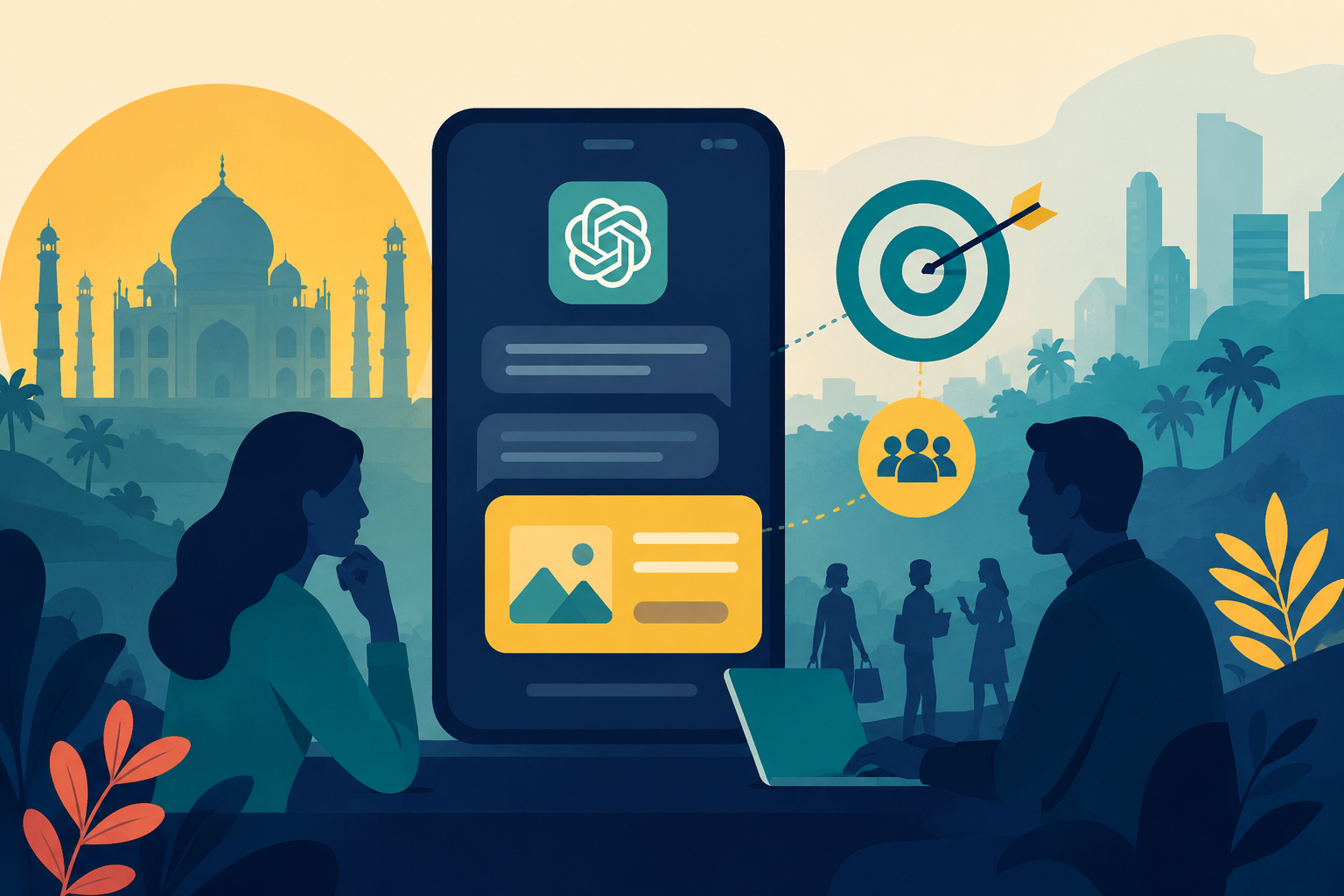
The most interesting aspect of ChatGPT Ads is where they sit in the consumer journey. Unlike a conventional display ad that interrupts a user while they are consuming content, these advertisements are designed to appear in the context of a conversation. When a user’s request indicates commercial intent, an eligible and relevant sponsored product or service may appear below the ChatGPT response. The ad is clearly labelled as sponsored and visually separated from the organic answer. OpenAI says the advertising system operates independently from the system generating ChatGPT’s responses, meaning advertisers cannot influence the answers themselves.
That distinction could be particularly important for brands. A consumer asking for help choosing a laptop, planning a holiday, comparing financial products or exploring beauty options is already signalling a need. The opportunity for advertisers is therefore less about simply buying attention and more about being present when consideration is already happening. OpenAI has positioned this as a high-context advertising environment, where relevance comes from what a person is asking in the moment rather than traditional keyword bidding or long-term advertising profiles.
The initial scale of the rollout also suggests that the advertising industry is taking the opportunity seriously. More than 50 brands are expected to go live in India, with WPP and Omnicom named as OpenAI’s first agency partners. Their involvement gives ChatGPT access to established expertise in strategy, creative, measurement, brand safety and campaign execution, while also connecting the platform to the country’s existing media-buying ecosystem.
OpenAI is also opening the door to smaller advertisers. From September 4, businesses in India will be able to access a self-serve ChatGPT Ads Manager, with daily budgets starting at ₹725. This could make the platform accessible beyond large brands and agency-led campaigns, although its adoption among small and mid-sized businesses will become clearer only as the system develops. Early advertiser interest is expected across categories including travel, financial services, retail, and health and beauty.
Privacy will inevitably be an important part of the conversation around this model. OpenAI says advertisers will not receive users’ conversation text, chat history, memories or personal details. Instead, advertisers will receive aggregate campaign information such as impressions and clicks, with additional performance metrics planned. OpenAI has also said it does not sell user data to advertisers, while ads will not be shown to users identified or predicted to be under 18 and will be restricted around certain sensitive or regulated topics.
Also read: How Brand Consistency Builds Recognition Over Years, Not Campaigns
For OpenAI, the move also has a larger business context. The company has been expanding its presence in India through consumer products, partnerships and initiatives aimed at increasing AI adoption. Advertising gives it another potential revenue stream alongside subscriptions and enterprise services. Reports have also linked OpenAI’s broader push for revenue diversification to its potential future public-market ambitions.
For brands, however, the real test begins now. The presence of advertisements on ChatGPT does not automatically make the platform a major advertising channel. Advertisers will want to know whether these placements can generate meaningful consideration, clicks, conversions and return on investment. They will also need to understand how ChatGPT fits alongside search, social, retail media and other established digital channels.
What makes ChatGPT Ads worth watching is that it introduces advertising into a fundamentally different kind of digital behaviour. Search engines helped brands reach people looking for information; social platforms helped them reach people based on interests and behaviour. Conversational AI could give brands access to moments when consumers are actively discussing what they want to do next. Whether that becomes a significant part of India’s advertising landscape will depend on performance, consumer acceptance and how thoughtfully brands use the new environment.