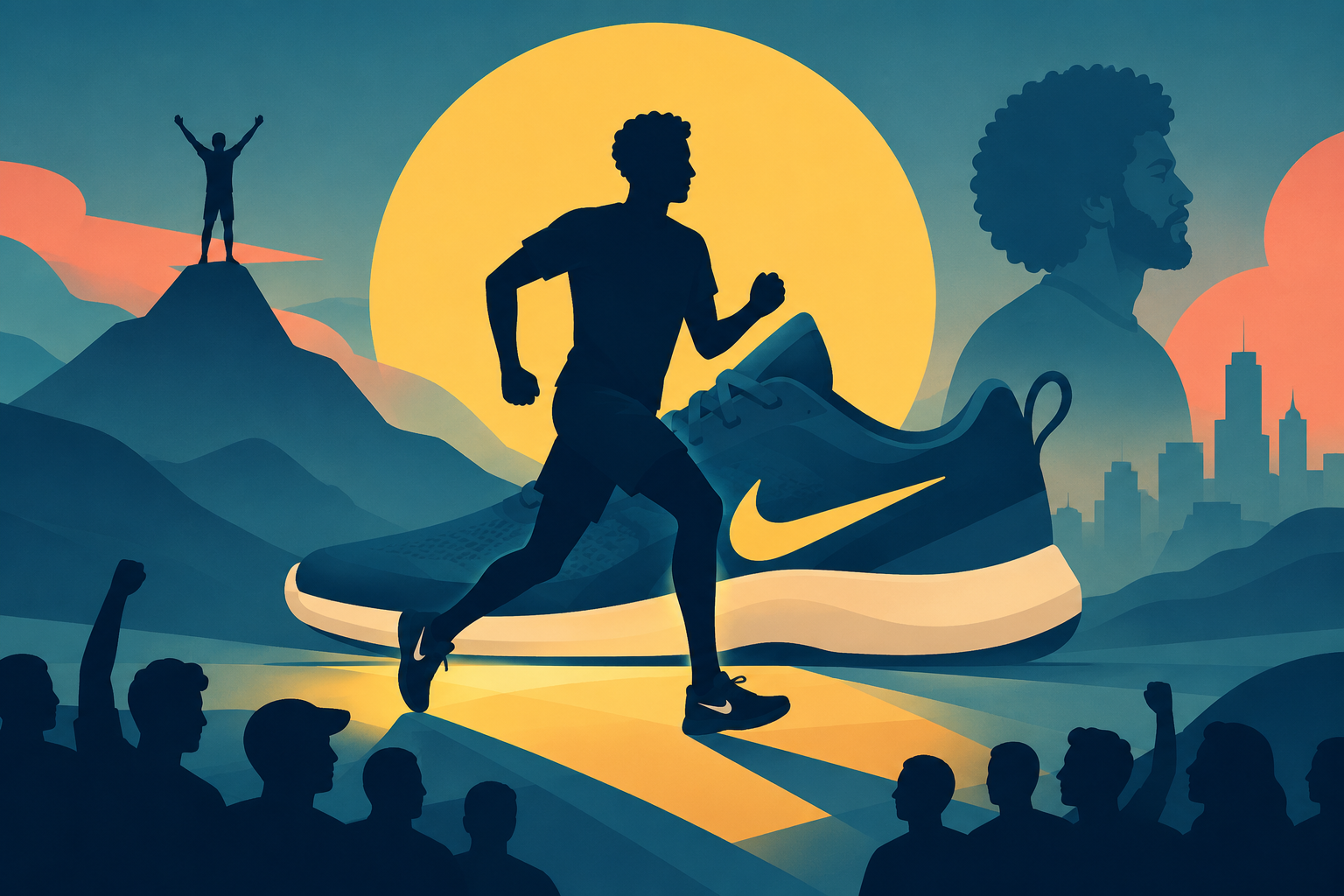
Nike doesn't sell shoes, it sells identity. Discover why emotion beats features and what D2C brands can learn from it.
Looking for a Shorter Overview?
AI Summary
Key Moments
Commodity Trap Explained
Selling only functional footwear leads to price wars; Nike avoided this by focusing on brand identity.Myth Over Material
Nike sells a story and rebellion, letting the shoe be just the souvenir of that narrative.Courage Branding
Taking bold, polarizing stands (like Kaepernick) builds fierce loyalty and separates the brand.Stop Specific Thinking
Brands must sell emotional experiences, not technical specs, to survive against low‑cost imitators.Look at a Nike television commercial from the last thirty years. Watch closely.
You will notice something entirely intentional: they almost never show you a close-up of the stitching.
They do not bore you with endless lectures about ergonomic arch support, breathable mesh, or proprietary polyurethane soles.
Why?
Because the foundation of world-class Nike branding is the realization, made decades ago, that selling physical footwear is a race to the bottom.
They know that if you are just selling rubber and thread, you are merely a commodity vendor. And commodities get crushed on price.
So how did Nike actually escape this commodity trap?
True Nike Branding Is Selling an Identity, Not Rubber
Back in the 1980s, Phil Knight made a brutal confession that would give a modern product manager an existential crisis. He admitted that Nike was no longer a manufacturing company; it was a marketing company.
Look at the legendary Air Jordan deal in 1984. The NBA literally banned the original black-and-red colourway for violating uniform rules, slapping Michael Jordan with a $5,000 fine every single time he stepped onto the court.
What did Nike do?
They didn’t redesign the shoe to comply with the boring rules. They gladly paid the fines out of their own pocket and aired national commercials celebrating the rebellion.
So how did this defiance make them different in the buyer’s eye?
Now they weren’t just buying pieces of leather glued together in a factory, but buying a piece of Jordan’s defiance.
That is the uncompromising genius of Nike branding. You pay for the myth. The physical shoe is just the souvenir you get to take home.
The Indian D2C Obsession With Specifications
Now, compare that masterclass to how modern founders launch sportswear or sneaker brands in India today.
A funded startup in Bengaluru drops a new sneaker line on Myntra or Instagram.
What is their immediate instinct?
They blast consumers with technical jargon. “Orthopaedic memory foam!” “Aerodynamic design!” “Four-layer shock absorption!”
They genuinely think logical features will convince a consumer to part with ₹4,000 of their hard-earned money.
But they don’t.
Now let’s think about Nike’s case.
Why would a 20-year-old college student in Pune scrape together his pocket money to buy an expensive pair of Air Force 1s that will inevitably crease and get stepped on the very first time he boards a crowded city bus?
It makes zero logical sense. None.
He does it anyway. Why? Because effective Nike branding has convinced him that wearing that swoosh instantly elevates his social standing. It is social armour against a chaotic world.
Stop Selling the Mattress, Sell the Sleep
This is the unforgiving lesson most performance marketers refuse to learn.
If you spend your entire advertising budget talking about how your product is manufactured, then you are doing it wrong.
Someone in Tiruppur or Vietnam will eventually copy your fabric, replicate your stitching, and undercut your price by fifty percent on Flipkart. You cannot patent rubber and cloth forever.
What you can protect is the emotional territory you own in a consumer’s mind.
The Unfathomable Cost of Courage
But here is the catch. You cannot just invent an emotional narrative overnight and expect people to blindly believe you.
Also read: What Fevicol Branding Teaches About Consistency in Branding
Colin Kaepernick took a knee in 2016. Two years later, Nike risked massive nationwide boycotts, people burning their shoes on Twitter, and a massive short-term stock drop, just to put his face on a billboard.
Why?
Because genuine Nike branding requires taking a clear, polarizing stance. It means being willing to alienate half the room to win the undying, fanatical loyalty of the other half.
If your brand team is terrified of offending a single person on the internet, stop trying to emulate them. You simply do not have the institutional stomach for it.
So, before you approve your next ad campaign, look at your copy.
Are you desperately trying to sell the physical specifications of your product because your brand has no soul? If so, you have already lost.
Stop selling the rubber. Start selling what happens when the customer puts it on.
Because the real masterclass in Nike branding is making consumers believe that greatness is just one purchase away.
– Written by Rajnish Singh, a copywriter and strategist with a background in fast-paced journalism, who explores the gap between what brands promise and how consumers actually behave.