Discover how Netflix built a powerful brand through product innovation, seamless UX, and local adaptation, not advertising alone.
Looking for a Shorter Overview?
AI Summary
Key Moments
Engineered Binge‑Watching
Netflix introduced auto‑play and seamless next‑episode loading, turning viewing into an addictive, frictionless experience.Strategic Pivot
The company killed its DVD‑mail business and pivoted entirely to streaming, risking its revenue to stay ahead of market trends.Local Adaptation
Netflix introduced mobile‑only pricing and hyper‑local originals to fit the realities of Indian consumers.Product Over Promotion
The article argues that authentic branding comes from a solid product; marketing cannot fix a broken user experience.There are many streaming platforms, but why did Netflix win the streaming wars?
Most marketing executives think they understand exactly.
They point to the iconic, minimalist red “N.” They talk about the legendary “Ta-dum” sound effect that plays before every original show.
They look at the massive billboards in Times Square and desperately want to believe the secret to Netflix Branding is just a brilliant visual identity and a witty Twitter account run by millennials.
But they are completely missing the point.
Netflix Branding: Engineering a Behavioral Addiction
The truth is, Netflix didn’t build a world-class brand through traditional advertising. They built it through product friction, or rather, the complete elimination of it.
Think about it.
Before them, watching a TV show required waiting an entire week for the next episode. You were a slave to a network schedule. Netflix didn’t just give us movies; they invented the “binge-watch.”
They introduced the feature that auto-played the next episode in exactly five seconds. You didn’t even have time to reach for the remote before the next hour of your life was hijacked.
That isn’t just clever UX design. That is the core of their entire strategy.
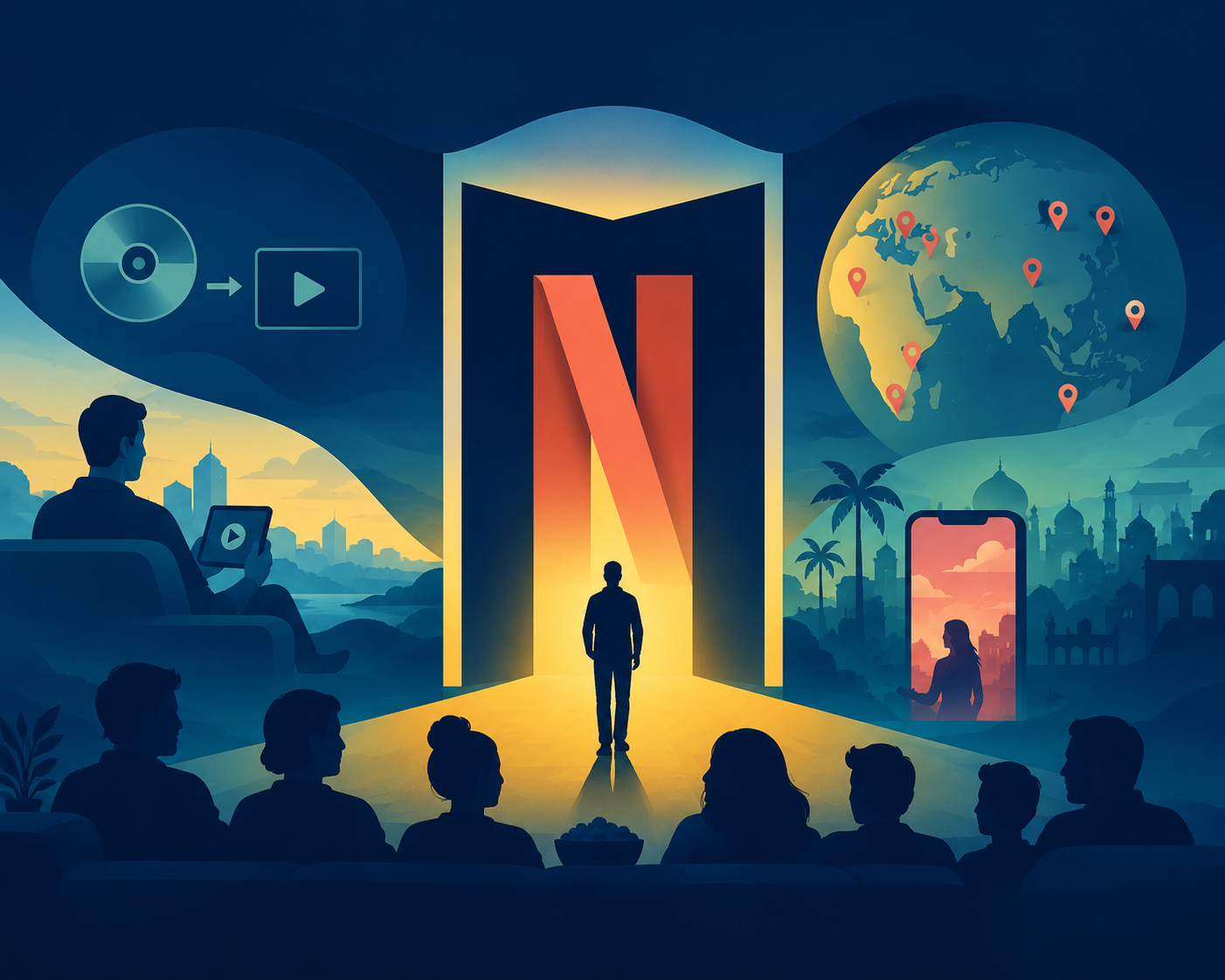
If you look back at their history, they have always been ruthless about adapting their product. When they were mailing physical DVDs in red envelopes, they realized the internet was going to kill their business model.
So what next step did they take that was so courageous?
They killed it themselves.
Yes, you heard it right. They killed their own running business model and pivoted entirely to streaming, risking their entire revenue stream.
And when your product fundamentally changes human behavior and adapts to reality, your brand practically markets itself.
The Local Reality Check
But you cannot just take a Californian playbook, paste it onto the rest of the world, and expect it to work.
Just look at the Indian streaming market. When Netflix first arrived, they priced themselves like a premium, global luxury service. Indian consumers, who were getting dirt-cheap data from Jio, completely ignored them.
Why pay ₹800 a month when Hotstar and Amazon Prime were virtually giving away live cricket and regional content for a fraction of the cost?
A lesser company would have packed up, blamed the consumer, and left the market entirely.
Instead, the team behind the global Netflix branding engine swallowed their pride. They did the unglamorous operational work. They introduced a mobile-only plan for ₹149.
They started heavily investing in gritty, hyper-local Indian originals like Sacred Games and Kohrra, completely abandoning the polished Hollywood aesthetic for authentic street-level storytelling.
They realized that in India, a shiny logo means absolutely nothing if the pricing and the content don’t reflect the reality of a middle-class commute.
Also read: Why Apple’s Think Different Campaign Still Matters Today
The Product IS the Marketing
This is exactly where traditional startup founders get it entirely wrong.
You see an Indian tech founder launch a basic app, a buggy SaaS platform, or a generic subscription box, and their very first instinct is to buy massive billboard space in Mumbai or Delhi.
They want the prestige of a global tech giant without doing the hard, foundational engineering work first. They think a clever ad campaign will magically fix terrible customer retention.
But true Netflix branding doesn’t happen on a billboard. It happens in the shadows. It happens when your recommendation algorithm is so terrifyingly accurate that the user feels like the platform is reading their mind.
So before you call your agency to design a cooler logo or a catchy sound effect, take a hard look at your actual product.
If using your app is frustrating, or if your pricing alienates your core demographic, no amount of clever Netflix branding is going to save you. You cannot advertise your way out of a broken product experience.
Stop marketing. Start engineering.
– Written by Rajnish Singh, a copywriter and strategist with a background in fast-paced journalism, who explores the gap between what brands promise and how consumers actually behave.