Discover why consumers buy reduced risk, not just products, and how trust influences every purchase decision.
Looking for a Shorter Overview?
AI Summary
Key Moments
Core motive: reduced risk
Consumers choose products primarily to lower uncertainty, not just for features.Key risk categories
Financial, performance, physical, and time risks shape buyer confidence.Trust signals matter
Brand reputation, warranties, and reviews lower perceived risk and justify higher prices.Safety features as risk reducers
Visible safety measures, like airbags, increase buyer confidence by reducing risk.Have you ever noticed that people often choose a more expensive product even when a cheaper alternative is available?
The reason is simple.
Most consumers aren’t just paying for the product itself. They’re paying for reduced risk. Before making a purchase, people want confidence that they’re making the right decision and that the product won’t create new problems later.
Why Reduced Risk Is the Real Product Consumers Buy
Every purchase involves some level of uncertainty. Whether we’re shopping online or visiting a store, we naturally look for signs that help us feel confident.
While buying online, most people check product ratings, reviews, and customer feedback before placing an order. These simple checks give buyers a sense of reduced risk because they know others have already tested the product.
The same thinking applies when purchasing a car.
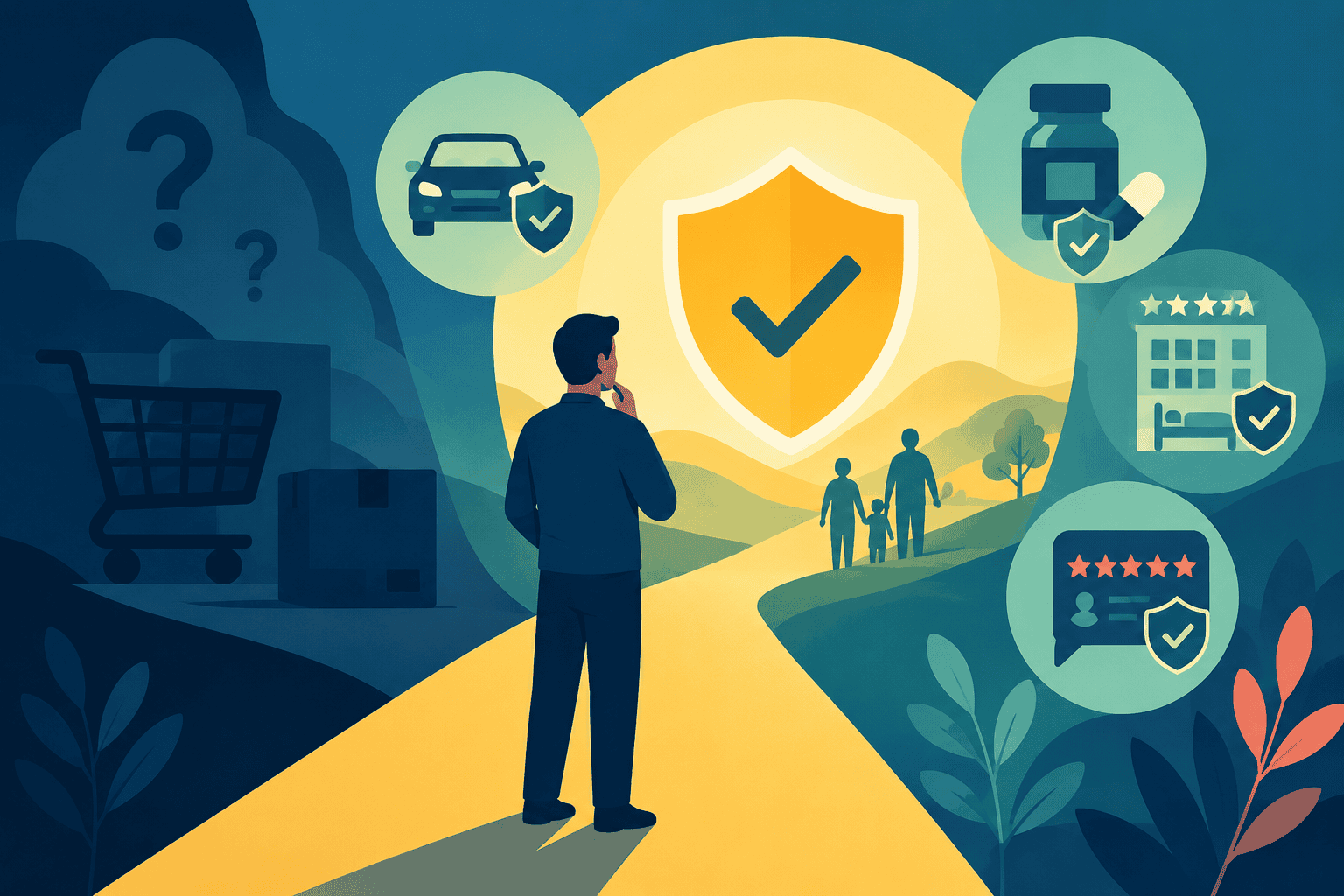
Buyers don’t only compare mileage, design, or features. They also look for safety measures such as airbags, crash test ratings, and advanced braking systems. These features don’t prevent accidents, but they offer reduced risk by making the vehicle safer for passengers.
A good example is India, where the Ministry of Road Transport and Highways proposed a 6-airbag mandate for passenger vehicles. After this proposal, many automobile manufacturers began offering six airbags as a standard feature. Customers appreciated this change because it increased their confidence in the product. The vehicle became more than just a means of transport.
It represented greater safety and reduced risk for families.
This idea isn’t limited to automobiles.
When buying vegetables, people check whether they’re fresh because they want to avoid health issues.
While purchasing medicines, they usually trust well-known brands instead of unfamiliar ones.
Even while booking a hotel, customers spend time reading reviews and checking ratings before making a payment.
In every case, the goal is the same: to reduce uncertainty before spending money.
This is exactly what the statement, “Consumers don’t buy products, they buy reduced risk,” means. People don’t simply purchase features or specifications. They buy the assurance that the product will solve their problem without creating another one.
Different types of risks influence buying decisions.
Financial risk is the fear of wasting money on a product that doesn’t deliver value. That’s why many people spend a little more on a smartphone from a trusted company, believing it will last longer and perform better.
Performance risk is the concern that a product may not work as promised. For example, customers often choose a well-reviewed laptop over a cheaper unknown brand because they trust its quality and reliability.
Physical risk relates to safety.
Parents usually buy certified baby products because they want to ensure they’re safe for their children.
Time risk is another important factor. Nobody wants to waste days returning a defective product or waiting for repairs.
Buying from a trusted seller often provides reduced risk because customers know they’ll receive reliable support if something goes wrong.
Imagine two water bottles.
Bottle A costs ₹250 and comes from a well-known brand with a 1-year warranty. Bottle B costs ₹150, belongs to an unknown company, and has no reviews.
Although both bottles perform the same basic function, many people still choose Bottle A.
They aren’t just paying for a bottle.
They’re paying for trust, reliability, and reduced risk that it won’t leak, break easily, or need replacement.
In the end, consumers rarely buy only the features of a product. They buy confidence, peace of mind, and the assurance that they’ve made the right choice.
The brands that succeed aren’t always the cheapest.
They’re the ones that consistently create trust and reduce uncertainty.
In marketing, a product may attract attention, but it’s the feeling of safety and confidence that ultimately convinces people to buy.