Blind media buying is dangerous See how mastering marketing mix modelling turns ordinary budgets into success
Looking for a Shorter Overview?
AI Summary
Key Moments
Cut seasonal guesswork with data
Marketing Mix Modelling distinguishes ad impact from seasonal trends, using the winter soup example.Isolate true advertising impact
Marketing Mix Modelling separates ad effects from external factors such as weather, delivering clear ROI.Avoid over‑advertising waste
The model spots when extra ads (e.g., billboards) bring no new customers, protecting profits.Predict demand with historical ad data
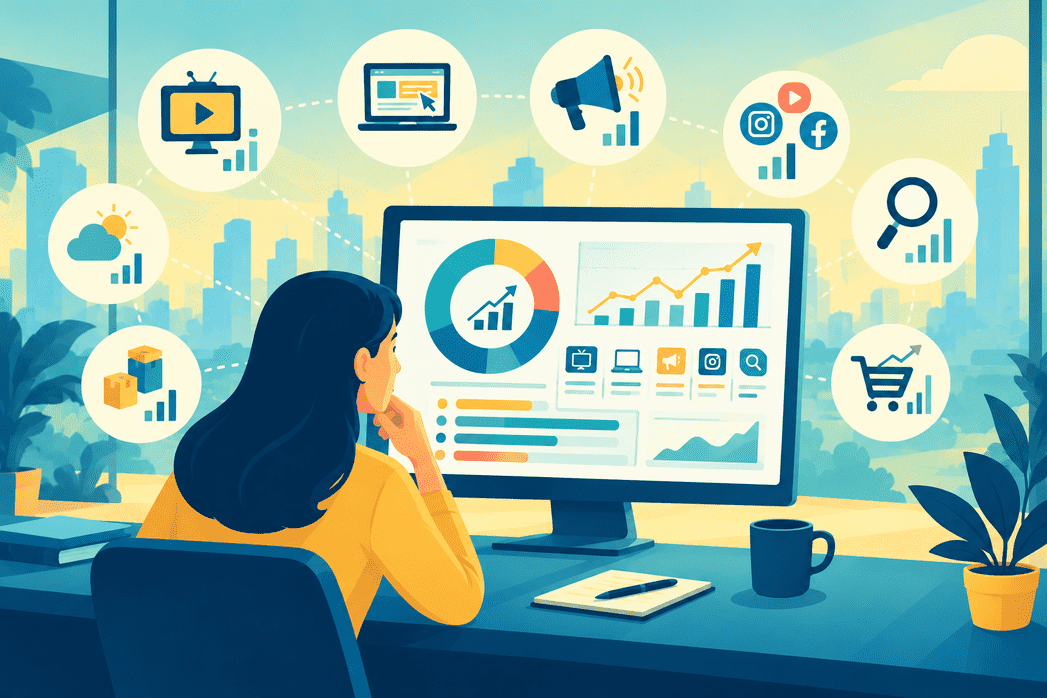
Marketing Mix Modelling forecasts product needs, helping retailers avoid stockouts and excess inventory.Businesses spend heavily on advertising, from television commercials to online banners. To understand which campaigns actually drive sales, managers use Marketing Mix Modelling, a method that analyzes how different marketing investments contribute to business results.
By using Marketing Mix Modelling, companies can evaluate their spending more clearly, identify what is working, and make better decisions about where to invest their advertising budgets.
How Brands Measure Sales with Marketing Mix Modelling
Marketing teams often use a mix of advertising formats, including print magazine ads and digital campaigns. Since a simple online counter cannot show how print advertising affects sales, Marketing Mix Modelling analyzes the impact of different channels together.
Procter & Gamble’s Chief Brand Officer, Marc Pritchard, set out to reduce waste in the company’s digital advertising supply chain. Its analysis uncovered problems including ad fraud, bot traffic, low viewability, and ads appearing beside unsafe content. For example, mobile newsfeed ads were visible for an average of just 1.7 seconds.
When P&G paused $200 million in digital advertising, the company found no negative impact on its sales data. This example highlights how Marketing Mix Modelling can help businesses identify what is working and allocate their budgets more effectively.
Customer buying habits can shift with the seasons. For example, a soup company may sell more hot soup during winter, leading managers to wonder whether a new television commercial caused the increase.
Marketing Mix Modelling can help separate the effects of advertising from other factors, such as weather. If the analysis shows that colder temperatures drove most of the extra sales, managers can make better-informed decisions about future advertising instead of assuming the campaign was responsible.
Businesses want advertising to generate measurable returns. For example, a clothing store that spends $10,000 on digital videos may aim to earn $15,000 in return.
A Nielsen study on cross-media optimization found that brands could increase total impressions by 39% simply by reallocating their media budgets more effectively, without spending more. By identifying which channels perform best, the model helps managers shift spending away from underperforming videos and toward more effective options, such as online banners.
Retail managers need to plan production carefully, especially before busy periods such as December. Guessing demand can lead to costly mistakes: if a store runs out of toys, it may miss potential sales.
Marketing Mix Modelling can help estimate future demand by analyzing past sales alongside current advertising plans. These insights can guide factory managers on how many toys to produce, helping retailers avoid empty shelves and better match inventory to expected customer demand.
As we discussed in our previous article about Attention Metrics, some websites generate fake clicks through automated bots. A site may report a million clicks and charge a business for the traffic, even though those clicks do not come from potential customers.
Marketing Mix Modelling helps managers look beyond click counts by examining how advertising relates to actual sales. Since bots do not make purchases, the analysis can help reveal when a channel’s reported engagement is not translating into revenue, allowing businesses to reconsider where they spend their advertising budget.
Spending more on advertising does not always lead to more sales. A coffee shop might attract more customers after running three local billboard ads, but increasing the campaign to ten billboards may not bring in any additional business.
Also read: Why Does Creative Diversification Matter When Brands Advertise Across Multiple Platforms?
Marketing Mix Modelling can help identify when a channel has reached its limit. If the extra billboards are not generating more customers, the shop owner can reduce that spending and protect the business’s profits.
Loved this article? Read more insightful articles on Brand Custodian.
–Written by Rajnish Kumar, a copywriter and strategist with a background in fast-paced journalism, who explores the gap between what brands promise and how consumers actually behave.