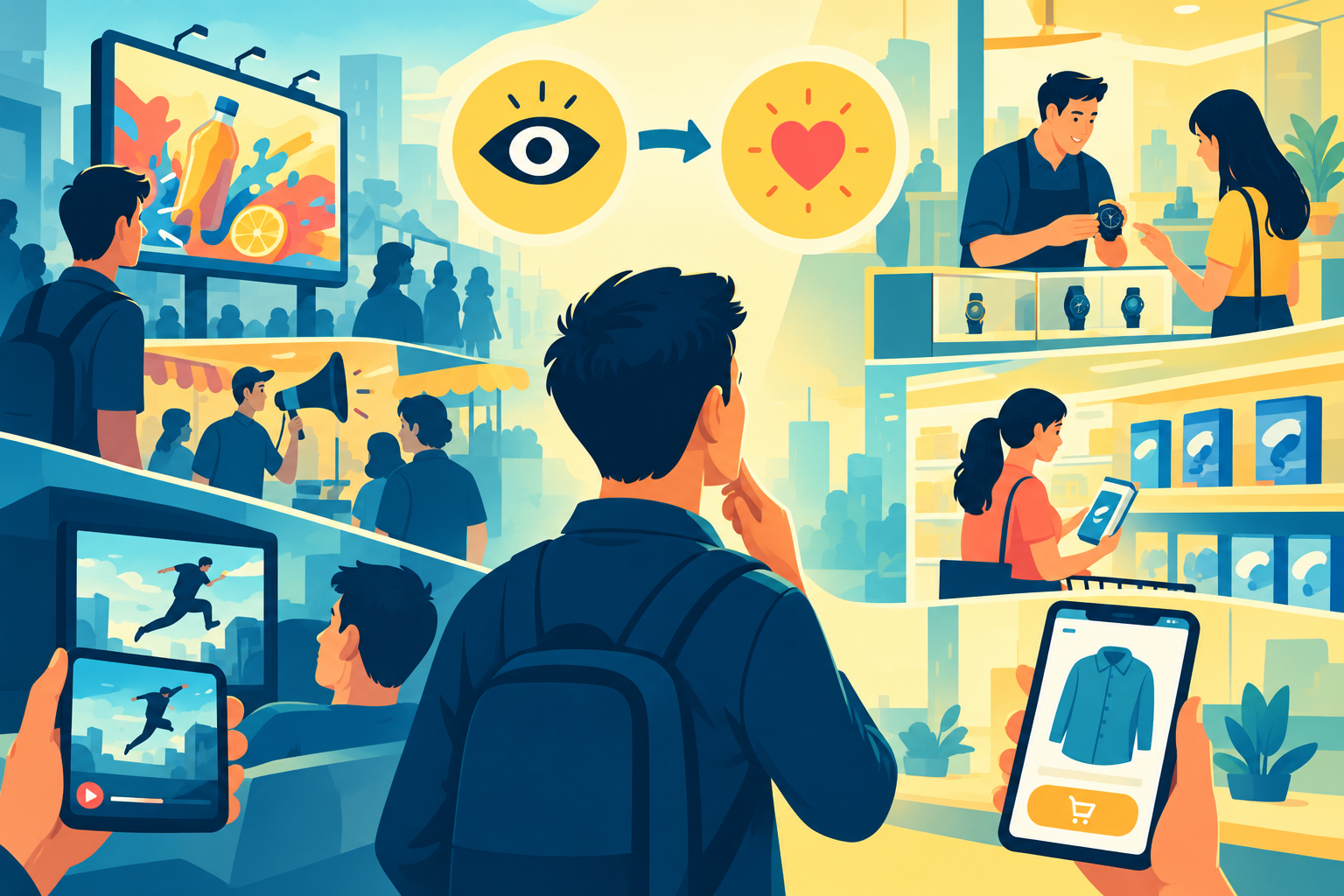
Loud ads are dangerous. See how mastering true audience interest turns a quick glance into explosive retail success.
Street markets are always full of loud noise and bright lights. Shopkeepers place large speakers at the front of their shops, hoping to stop people walking by. People quickly turn their heads toward the loudspeaker box. But getting someone to look at a product does not create real audience interest.
The walkers only looked at the speaker because the sudden noise startled them. After two seconds, they kept walking down the street without buying the product. A business makes a huge mistake when it treats a quick glance as genuine audience interest.
True buying behaviour only happens when a shopper stops walking, touches the physical item, and starts asking the shopkeeper real questions about the price.
Why Loud Noises Cannot Create Audience Interest
Many sellers spend a great deal of money painting bright colours on their outdoor advertising boards. They think that a painted board will automatically make a driver buy a bottle of cold drink. A driver looks at the bright paint simply because the human eye naturally notices bright things on a dark road.
This quick eye movement is just basic attention. It is completely different from true audience interest. To give the buyer a real reason to buy, the brand must show the driver why a physical cold drink matters on a hot afternoon.
If a large poster only flashes a light, the driver forgets the printed brand name within a few seconds. The business owner reads an office report showing that a thousand cars passed his poster today. He thinks his shop will attract thousands of new buyers. But without real audience interest, the driver will never enter the shop to buy that product.
This same confusion also happens on mobile phone screens. A clothing company pays for a digital video of a young man wearing joggers and jumping off a tall brick wall. A college student watches the whole video on his screen because the jump looks exciting. The computer software records this as a highly successful video view.
The owner looks at the computer screen and thinks the student is very interested in the joggers the actor is wearing. But the student does not care about the clothes at all. He just liked watching the dangerous jump.
The brand spent a lot of money getting people to watch the video, but it failed to create any audience interest in the clothes themselves. After watching the stunt, the student closes the app and puts the phone back in his pocket. The company warehouse remains full of unsold joggers because watching a man jump off a wall does not make a student want them.
A smart business completely ignores how many people quickly glance at a poster or a digital video. Instead, a wise seller measures only the physical steps taken by the buyer inside the shop. If a buyer walks through the door, picks up the watch, and asks how to adjust the leather strap, that proves real audience interest.
Also read: Why Does Message Density Make Marketing Less Effective?
The seller knows that a buyer holding the actual product is far better than a hundred people just staring at a loudspeaker from the street. Real audience interest is what makes a person enter the shop and pay money at the billing counter.
A company must stop trying to surprise people with loud noises or bright flashing lights. To make a profit, a brand must quietly present a useful physical item that makes the buyer want to buy the product.
Loved this article? Read more insightful articles on Brand Custodian.
–Written by Rajnish Singh, a copywriter and strategist with a background in fast-paced journalism, who explores the gap between what brands promise and how consumers actually behave.