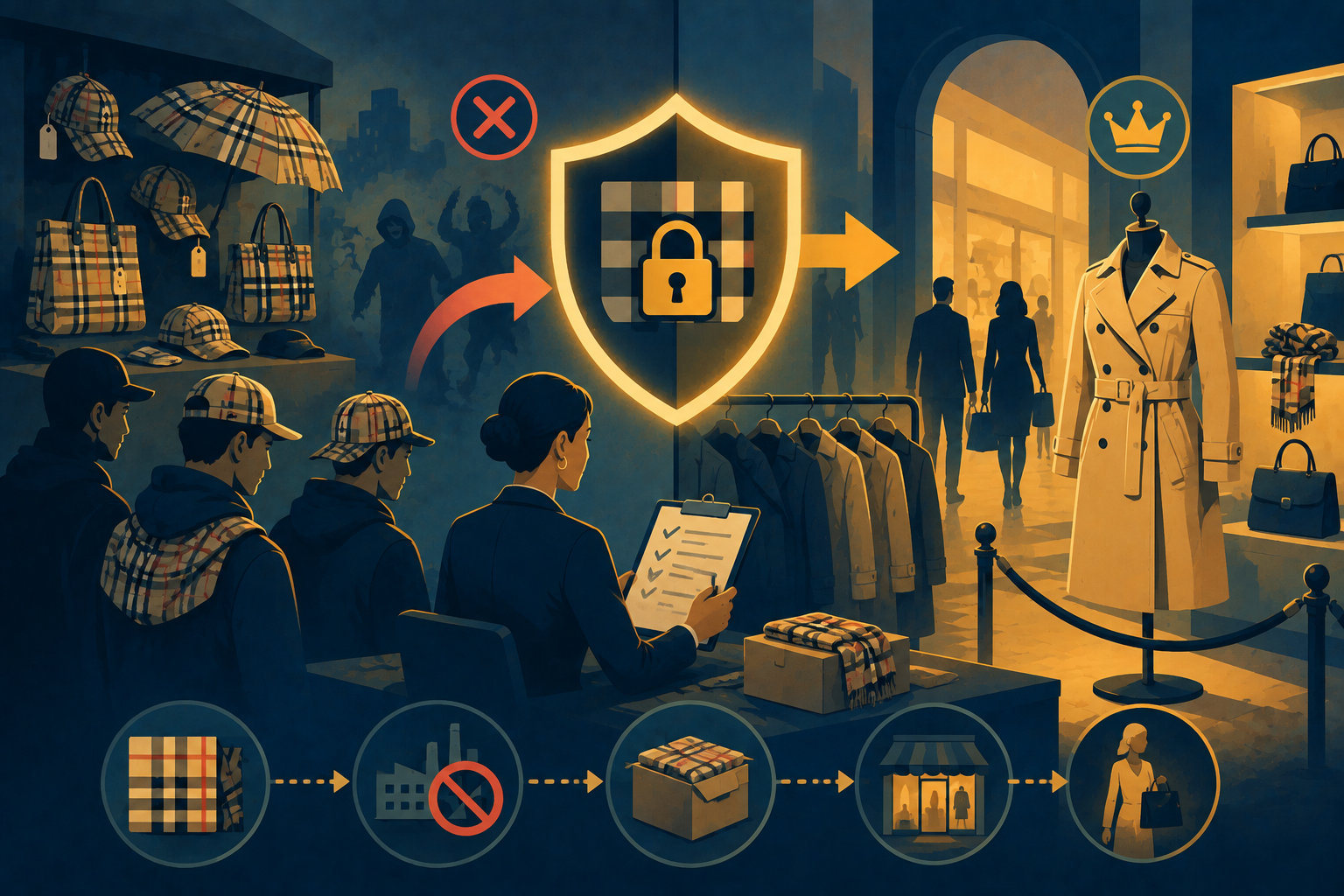
Why did wealthy buyers abandon Burberry? Learn how strict brand protection saved the luxury fashion house from cheap street copies.
Looking for a Shorter Overview?
AI Summary
Strict brand protection is the only thing keeping a fifty-thousand-rupee jacket from looking like a cheap footpath item. In the early 2000s, the famous British clothing maker Burberry almost lost its wealthy buyers entirely. The company printed its famous camel, red, and black crossed lines on too many low-cost items, like dog collars and small umbrellas.
Soon, street gangs and angry football fans in London began wearing fake versions of this exact cloth pattern. This change in who wore the clothes shows exactly why brand protection matters. If wealthy buyers see a cheap copy of their expensive coat on a local train, they simply stop paying high cash prices.
Why Brand Protection Saves Expensive Clothes
Between 2002 and 2004, the British clothing company faced a major problem on the streets. Fake factories in different countries copied the famous check pattern and printed it on very cheap hats and plastic shopping bags.
Soon, noisy football crowds were wearing these cheap hats everywhere. Some local bars in England even put ‘No Burberry’ signs on their doors, stopping anyone wearing Burberry.
Without proper brand protection, the expensive clothing maker suddenly looked like a cheap street brand. Wealthy shoppers in major malls completely stopped buying the thick winter coats because the brand became strongly linked to the UK “chav” culture of the early 2000s.
When a new boss named Angela Ahrendts joined the office in 2006, she took direct action. The company stopped putting the famous check pattern on every item. In fact, the factory reduced the crossed lines to just 10 percent of its daily production.
This immediate brand protection step removed the famous pattern from the shop shelves. The factory returned to making simple, high-quality brown trench coats without any large printed patterns on the outside. A clothing maker wins back its wealthy buyers when it stops printing its logo on every small item in the shop.
The company also spent millions of pounds buying back paper agreements from other small factories. Earlier, Burberry allowed many outside factories to print its name on cheap sunglasses and small perfumes just to make quick cash. Strong brand protection means a company must control exactly who uses its brand logo.
The new managers stopped other factories from making cheap goods under their name. This direct action ensured that only the main factory made the expensive coats. The company took back full control of the sewing machines and cloth materials.
High daily sales in expensive shops depend on the physical items being rare. If a buyer sees the exact same coat being sold at a heavy discount in every other local shop, the rich buyer will never pay the full price.
Strict brand protection forces a company to keep its products rare in the open market. Instead of selling old jackets with a discount tag at year’s end, the factory physically destroyed the extra clothes. A shop owner knows that seeing too many cheap items on the street completely ruins the high price tag.
Today, buyers are once again happily paying lakhs of rupees for a plain brown Burberry coat. The business corrected its huge mistake by pulling physical items out of cheap street markets.
Also read: Nokia: How Brand Complacency Can Destroy Market Leadership
True Brand Protection is not just about catching fake factories that make cheap copies. A wealthy company must sometimes stop making cheap items completely, even if those items bring in fast daily cash. A clothing brand stays famous only when its managers carefully control exactly who wears its clothes on the streets.
Loved this article? Read more insightful articles on Brand Custodian.
–Written by Rajnish Singh, a copywriter and strategist with a background in fast-paced journalism, who explores the gap between what brands promise and how consumers actually behave.