Don't wait until the customer is ready to buy. See why brand salience is the ultimate secret to long-term market dominance.
Looking for a Shorter Overview?
AI Summary
Key Moments
Instant Recall in Emergencies
When a sudden need arises—like serving guests or fixing a shoe—people reach for the brand already living rent‑free in their mind.Stress‑Driven Decision Making
High brand salience ensures the exact product name appears first in a rush, overriding cheaper alternatives.Everyday Trust Through Repetition
Regular exposure makes brands the default choice, as seen with Crocin in a midnight medicine box.Long‑Term Salience Building
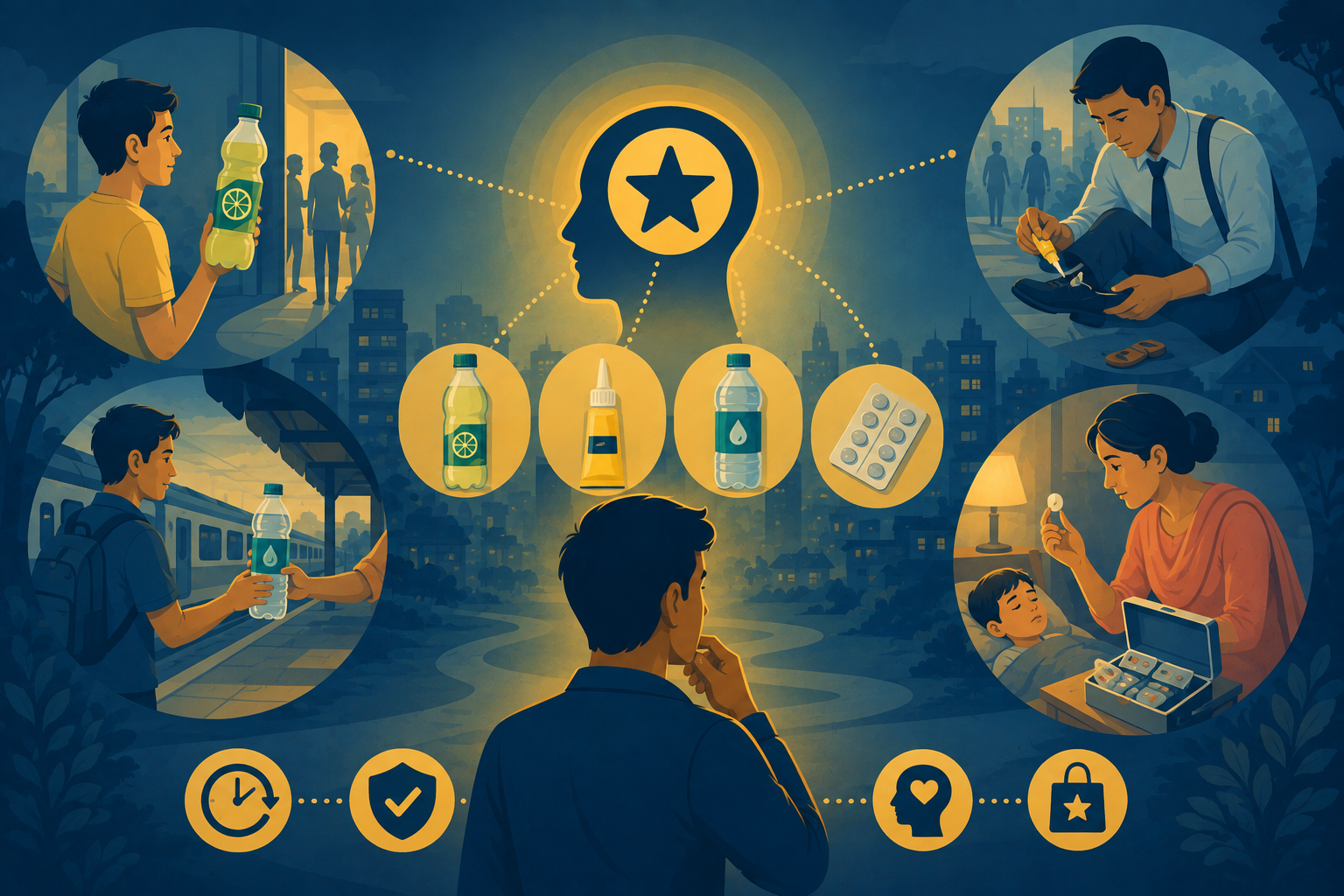
The true goal is not a single purchase but continuously staying top‑of‑mind to be chosen without conscious thought.When unexpected guests arrive on a hot afternoon, brand salience determines exactly which cold drink a homeowner buys from a local store. He doesn’t sit and compare companies on his mobile phone. He hands fifty rupees to his nephew and tells him to bring a large bottle of Limca.
The nephew buys the exact bottle. The house owner wasn’t thinking about soft drinks all morning while cleaning the rooms, but the moment he needed to serve his guests, that specific name came to mind first.
This quick memory happens entirely because of brand salience. It simply means a company remains in a buyer’s mind until the exact moment a sudden need comes up.
How Brand Salience Gets Daily Sales
A bank worker walks to his office branch, and his leather sandal strap breaks on the rough road. Walking barefoot inside a strict government bank is impossible. The worker rushes to a small roadside cobbler in a hurry. He asks the repairman directly for Fevi Kwik to fix his shoe.
He never asks for a strong chemical liquid or a fast-drying adhesive. He only has five minutes before his morning meeting starts. High brand salience makes him say that exact name in a stressful moment. The company gets the sale because strong brand salience made him remember their tiny yellow tube instead of a cheaper local glue sitting right next to it.
Passengers travelling by train face this exact situation at crowded railway stations. A train stops at a small platform for just two minutes during a long summer journey. A father runs out of his coach to buy drinking water for his thirsty family.
He specifically asks the platform vendor for a Bisleri bottle. The vendor tries to hand him a cheaper local plastic bottle to make extra profit. The father refuses outright and insists on the correct bottle. Earlier, the man was not thinking about water brands while resting on his seat.
But strong brand salience makes him insist on that familiar green label. He trusts the name completely, without checking the water quality or reading the manufacturing date.
When a young child gets a mild fever late at night, a worried mother wakes up and opens the metal medicine box at midnight. She does not turn to the internet to read medical papers about different chemical formulas. Her hands immediately search the plastic box for a strip of Crocin. She wants to bring the fever down quickly.
Regular brand salience makes her feel completely safe giving that specific tablet to her sick child. The medicine company did not sell her the tablet at midnight. The business used daily brand salience over many years to make sure she remembers their name the moment her child gets a fever. She ignores five other medicines in the exact same box just because one name feels safer.
Many local shop owners waste money trying to push customers to buy items right away. Most people simply do not care about a product until they urgently need it for a daily task. Buyers ignore hundreds of television ads and large road banners every week.
But a business must keep showing its name simply to build brand salience. The main goal is not an instant purchase today or tomorrow. The real goal is to stay in the buyer’s memory.
Also read: Brand Stretching: How Far Can a Brand Go Before It Breaks?
Smart brand salience makes sure that when a customer later faces a sudden problem, they call just one specific shop for the solution. The brand gets chosen simply because the customer remembered it first.
Loved this article? Read more insightful articles on Brand Custodian.
–Written by Rajnish Singh, a copywriter and strategist with a background in fast-paced journalism, who explores the gap between what brands promise and how consumers actually behave.