Boat's branding journey shows how affordability, lifestyle positioning, and localisation built one of India's biggest consumer brands.
Looking for a Shorter Overview?
AI Summary
Key Moments
Foundational Insight: Consumers Want Durability Over Tech
Boat realized Indian youth needed rugged, stylish accessories that survive daily commutes, not fragile premium earphones.Visual Branding Weapon: Bold Colors & Neon Aesthetic
They used aggressive bass‑heavy sound profiles, neon hues, and braided cables to turn earbuds into eye‑catching streetwear.Celebrity & Event Leverage: Halo Effect Through Partnerships
Boat partnered with sports stars and sponsors major music festivals, building credibility without technical ads.Pricing & Impulse Strategy: Look Premium, Feel Affordable
The brand priced low enough for impulse buys while appearing expensive, ensuring durability and cultural appeal.Step into any crowded place, like Rajiv Chowk Metro Station or any railway station, at around nine in the morning, and observe what people are using to listen to music.
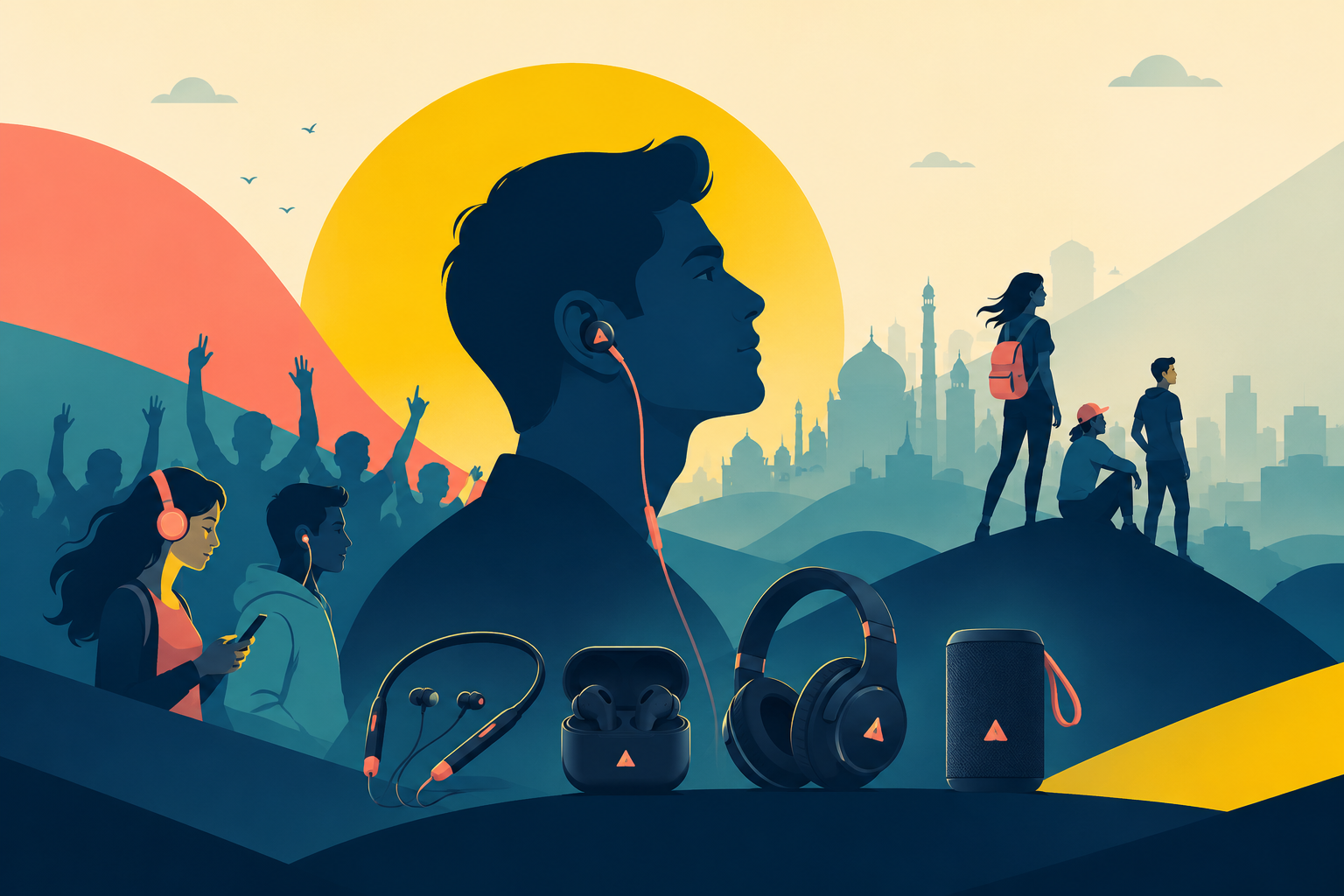
You will not see people carefully untangling premium Sennheiser or Sony wired earphones. You will see an absolute sea of chunky plastic, funky colours, and thick neckbands stamped with a tiny ship logo.
And the people wearing them do not care about active noise cancellation. They definitely do not care about the frequency range of their earbuds either. They are buying a cheap, accessible identity that gets the job done every day.
A massive part of this cultural shift comes down to Boat’s aggressive, highly localised branding strategy.
The Genius of Boat Branding
Ten years ago, the Indian audio market was trapped in a miserable binary.
You either bought a premium ₹10,000 Sennheiser or Sony product, or you picked up a cheap earphone from a local mobile repair shop. And that inexpensive pair would inevitably break near the audio jack within a few days. There was absolutely nothing in the middle.
When Aman Gupta and Sameer Mehta started tinkering with accessories in 2014, almost nobody predicted their venture would redefine consumer tech in India.
By 2016, they officially launched the brand under Imagine Marketing. But they did not begin with flashy wireless earbuds. They started by solving one of the most frustrating problems smartphone owners faced: building durable Apple charging cables.
That logical starting point gave them the perfect blueprint for audio products.
They did not invent a revolutionary audio codec to disrupt the market. They simply realised that Indian youth did not want fragile, disposable earphones. They wanted a stylish accessory that would not snap in half during a crowded local bus ride.
So they executed something incredibly cynical but brilliant.
They sourced standard hardware from Shenzhen, China. But instead of wrapping it in cheap rubber, they used durable braided cables.
They tuned the audio profile to be aggressively bass-heavy, perfectly suited to Bollywood party anthems and Punjabi pop tracks. They introduced bold neon colours and transformed a fragile electronic utility into rugged streetwear.
The core engine of Boat’s branding relies on creating a powerful halo effect.
Boat did not spend money hiring sound engineers to explain frequency ranges and technical specifications on television. Instead, it partnered with Hardik Pandya, Kiara Advani, and Shreyas Iyer.
It aggressively sponsored major music festivals and turned a basic Bluetooth earbud into a lifestyle essential for college students across Tier-2 cities.
The company recognised a fundamental truth about the Indian middle-class consumer. A product does not need to be technologically superior.
It simply needs to look significantly more expensive than its actual price and survive the daily wear and tear of an Indian commute.
Also read: Why Customer Experience Is Really a Branding Strategy
The Audio Commodity Trap
Hundreds of consumer electronics startups invest heavily every year trying to compete on specifications.
They launch earbuds claiming slightly better battery life or marginally longer Bluetooth range.
And that is exactly where they make a blunder that gets them completely slaughtered on the retail shelf.
They treat the Indian buyer like a rational machine, comparing technical specifications on a spreadsheet.
Audio hardware is essentially a commodity today. Anyone with a reliable manufacturing contact in China can import a perfectly functional pair of wireless earbuds. There is absolutely nothing wrong with that.
But what you cannot import is the cultural leverage that Boat created out of thin air.
The brand convinced an entire demographic that a relatively inexpensive piece of plastic had become as essential as a smartphone.
Boat proved that winning the Indian hardware market has very little to do with engineering.
You simply have to figure out what consumers want to show off, price it low enough to encourage impulse purchases…
…and make sure the cable never breaks.
– Written by Rajnish Singh, a copywriter and strategist with a background in fast-paced journalism, who explores the gap between what brands promise and how consumers actually behave.