Dark Mode Light Mode

The Search Shakeup: Why the Best Brands Can No Longer Depend on Clicks

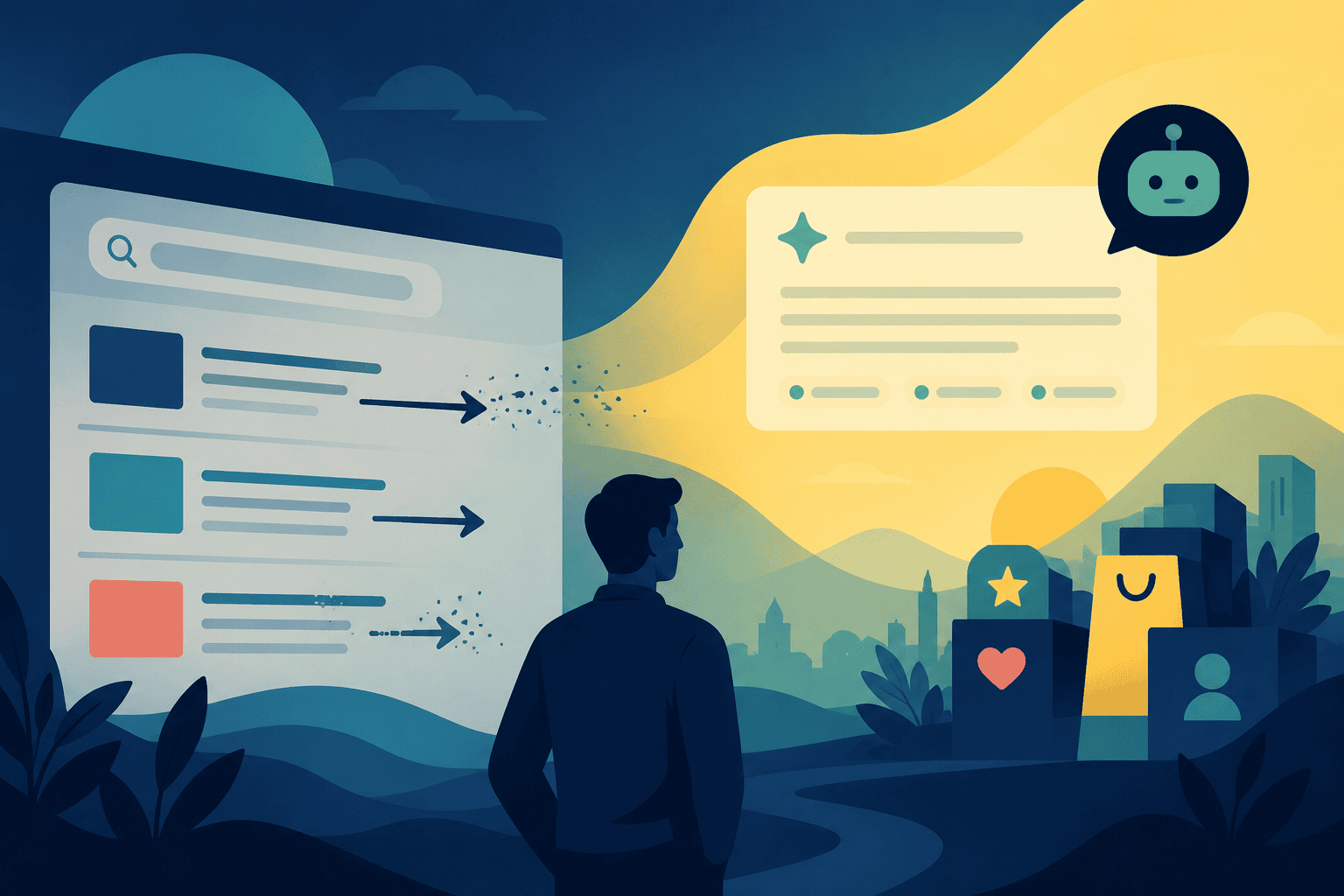
Google’s AI Overviews are stealing clicks, dropping traffic by half and forcing brands to chase AI citations instead of rankings. It’s the biggest marketing shift in years.
Best Brands Best Brands

Looking for a Shorter Overview?

Key Moments

AI Overviews slash organic clicks

Search traffic can drop 58% when AI Overviews appear, prompting a crisis for brands reliant on Google.

Users switch to direct chatbot queries

Millions, especially under 35, now ask Perplexity or Gemini directly, sending far less referral traffic to sites.

Publishers fight back amid traffic loss

Industry groups like Digital Content Next report double‑digit referral declines and dispute Google’s click‑volume claims.

Generative Engine Optimization emerges

Brands must become AI‑quoted sources, with mention in AI Overviews delivering up to 35% more organic clicks.

Any brand that relies on Google traffic should be scared. AI is answering the question before anyone even gets to your site. The numbers are brutal, and the industry is fighting over them. It was a simple deal for 15 years. You made good content. Google ranked it. People clicked. Traffic showed up. That deal is now being quietly ripped up. Google’s AI Overviews answer the question at the top of the page. More and more people read the answer and never click anything at all. If search traffic is key to your brand’s growth, this is the most important story in marketing today, especially for the best brands that have long relied on organic search.

Why the Best Brands Need a New SEO Strategy for AI Search

The numbers are stark, though they vary depending on who is doing the counting. A study by the Pew Research Center of US adults found that when an AI Overview appears, people click a link 8% of the time, compared with 15% when there’s no summary. Only about 1% ever click a source inside the overview itself. Ahrefs looked at 300,000 keywords and found that when an AI Overview appears, the top organic result loses about 58% of its clicks. That’s about double the drop seen earlier in 2025. Gartner predicted in 2024 that traffic from traditional search would fall by 25% by 2026. That prediction now looks, if anything, a little conservative.

That’s not even including the people who have given up on Google altogether. More and more people, especially those under 35, are asking chatbots like Perplexity or Gemini directly. According to Similarweb, these platforms send 95% to 96% less referral traffic than traditional search results. This problem isn’t just a Western one. AI Overviews are already live in India, and the D2C brands that grew on cheap Google traffic are just as vulnerable.

Advertisement

The industry has responded with a mixture of panic and open warfare. Publishers are up in arms. Digital Content Next, whose members include The New York Times and Condé Nast, found referral traffic from Google down by around 10% year on year. Its chief executive, Jason Kint, said the data was “ground truth” compared with Google’s reassurances. Google, meanwhile, says the sky isn’t falling. Its Head of Search, Liz Reid, has called total click volume “relatively stable”. Both can’t be right, and lawsuits over whether AI-generated answers constitute fair use or theft are already stacking up.

From the wreckage emerges a new discipline, awkwardly named Generative Engine Optimization. The goal is no longer simply to rank, but to become the source that AI chooses to quote. There is real upside. Seer Interactive found that brands mentioned in an AI Overview receive about 35% more organic clicks than those that are omitted. But the problem is that most marketers are not prepared. A GoodFirms survey in 2026 found that 43% are trying to optimise for AI search, but only 14% are actually measuring it. The industry is almost flying blind.

Three things follow for the young brand manager. First, don’t assume search traffic is a safe, growing asset anymore. It isn’t, and next year’s plan can’t rely on it. Instead, invest in what AI can’t summarise away: an owned audience through email and community, a brand distinctive enough that people search for it by name, and content built on original data or a genuine point of view.

That is the kind of content AI is more likely to cite rather than replace. Second, change what you measure. Brand mentions, AI citations, and assisted conversions are becoming more important than raw sessions. Finally, remember that the best brands have never relied on search traffic alone. They build demand that starts with people actively looking for them by name. The click was never the end, only the means. The best brands will be the ones people wanted to find in the first place.

Questions Answered

How much does AI Overview presence reduce click‑through traffic to top sites?

Up to 58% drop in clicks for top organic results.

Why are younger users abandoning Google for chatbots?

They prefer direct answers from Perplexity, Gemini, and similar tools.

How are publishers responding to declining search traffic?

Lawsuits filed, data disputes, and industry advocacy groups mobilize.

What is Generative Engine Optimization and why does it matter?

Strategy to become AI‑quoted sources for higher organic visibility.

Keep Up to Date with the Most Important News

By pressing the Subscribe button, you confirm that you have read and are agreeing to our Privacy Policy and Terms of Use
Add a comment Add a comment

Leave a Reply

Your email address will not be published. Required fields are marked *

Previous Post
Failed Marketing Campaigns

Campaign Autopsy: What Failed Marketing Campaigns Teach Brand Managers

Next Post
Customer Behaviour

Why Customer Behaviour Matters More Than What Customers Say

Advertisement