Learn why spending time in a retail store helps marketers understand customers, improve campaigns and make smarter decisions.
Looking for a Shorter Overview?
AI Summary
Key Moments
Data alone misses the why?
Marketers collect endless metrics but rarely observe actual buying, leaving crucial motivations hidden.In‑store behavior reveals true triggers
Watching shoppers pick, compare, and abandon products uncovers subconscious decisions no click‑through rates show.Staff insights and shopper language refine copy
Store employees and natural conversations expose how customers truly talk about products, guiding clearer messaging.Hybrid buying blends digital and physical
Customers zigzag between online research and in‑store touch, demanding marketing that matches this fluid journey.Marketing has never had more data at its disposal. We know which adverts people click, where they abandon a website, and how long they spend watching a video. We can track almost every interaction a customer has with a brand.
Yet there’s one thing many marketers rarely do: watch people actually buy.
It’s an interesting contradiction. We spend hours analysing consumer behaviour from behind a screen but very little time observing it in the real world. That disconnect can lead to campaigns that look great on paper but miss what truly influences a purchase.
What a Retail Store Can Teach Every Marketer
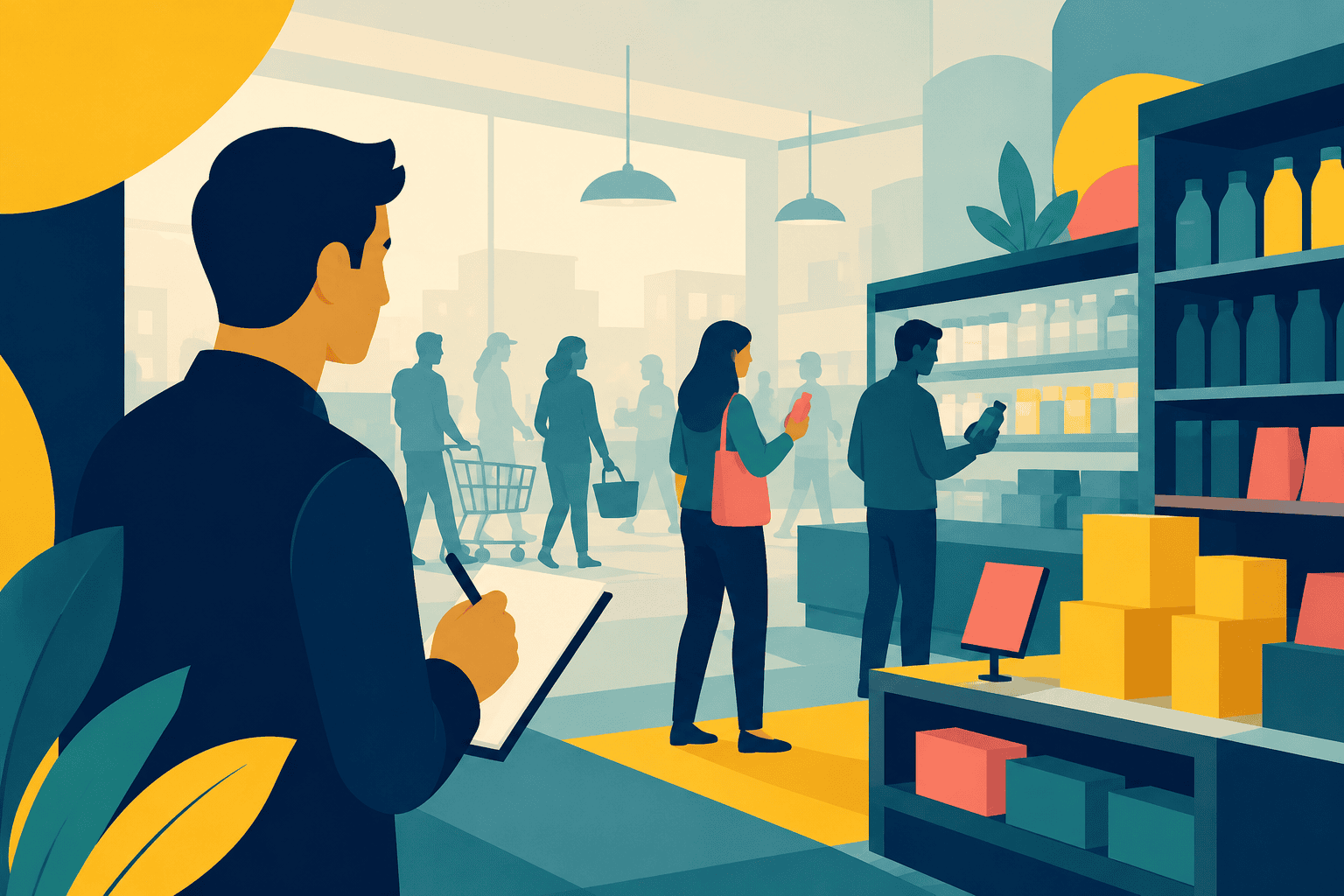
If I could recommend one habit to every marketer, regardless of industry or experience, it would be this: spend one day every month inside a retail store. Don’t go there to shop. Go there to observe.
Find a quiet corner, put your phone away, and simply watch. It won’t take long before you start noticing things that no dashboard could ever tell you.
A customer picks up a product, studies the label for a few seconds, and puts it back. Another compares three brands before choosing the cheapest one. Someone else walks straight past a promotional display without even noticing it.
Those moments may seem ordinary, but they’re full of insight.
Marketing is ultimately about influencing human behaviour. The problem is that most marketers spend far more time analysing numbers than observing the people behind them. Data tells you what happened. Watching customers inside a retail store often tells you why it happened.
Behavioural scientists have long recognised that people aren’t always good at explaining their own decisions. We like to believe our choices are rational, but many are shaped by emotion, habit, convenience or simply what catches our attention first. That’s why observational research has become such an important part of understanding consumers. Watching behaviour as it happens often reveals far more than asking someone to explain it later.
A retail store is one of the few places where you can see those decisions unfold in real time. You’ll notice customers stopping at one shelf but ignoring another. Some instinctively reach for familiar brands, while others spend several minutes comparing prices, ingredients or product features before making a choice.
The shelves themselves tell a story. Every product placement, promotional sign and end-of-aisle display has been designed with a purpose. Retailers know that visibility changes behaviour, and brands invest heavily to secure the best locations because those few extra seconds of attention can influence sales.
As you walk around the retail store, ask yourself simple questions. Which displays make people pause? Which products do shoppers pick up but rarely buy? Where do they seem confused, and where do they make quick decisions?
You won’t always know the answers immediately, but you’ll start asking better questions. That’s often where great marketing begins.
Just as valuable are the conversations happening around you.
Stand near almost any product category, and you’ll hear similar questions throughout the day. Customers want to know what’s different, whether something is worth paying more for, or which option offers the best value. If the same questions keep coming up, it’s often a sign that the packaging, signage, or marketing hasn’t communicated the answer clearly enough.
You’ll also notice that customers rarely speak the way marketers write. They don’t use carefully crafted brand messaging or internal marketing jargon. They describe products in simple, everyday language.
Listening to those conversations is one of the easiest ways to improve your own copywriting. The closer your marketing sounds to the way customers naturally speak, the easier it becomes for them to understand your message.
Then there’s the store staff.
If you want honest customer insights, speak to the people who interact with shoppers every day. They’ve answered the same questions hundreds of times, dealt with complaints, recommended products, and watched customers change their minds at the last second. Their perspective is grounded in real experiences, not assumptions.
Another fascinating thing to observe is how shopping has evolved. Very few people rely solely on what’s in front of them anymore. They’ll search for reviews, compare prices online, check social media, or send a photo to a friend before making a purchase.
The buying journey isn’t purely physical or purely digital anymore. It moves effortlessly between both, often within a matter of minutes. Watching that happen inside a retail store is a useful reminder that customers don’t think in channels. They simply want enough confidence to make the right decision.
The key is to make these visits a habit rather than a one-off exercise. Carry a notebook and jot down recurring patterns instead of isolated moments. One customer walking away from a product may not mean much. Twenty customers doing the same thing usually points to something worth investigating.
Over time, you’ll begin to notice patterns that shape the way you think about marketing. You may discover messaging that’s too complicated, packaging that creates confusion or promotions that attract attention without influencing purchases. These aren’t dramatic discoveries, but they’re often the insights that lead to better campaigns.
The best marketers I’ve worked with all have one thing in common. They’re endlessly curious about people. They know reports and dashboards are valuable, but they also understand their limitations. There’s no substitute for seeing customers in their natural environment.
In a world increasingly driven by algorithms, automation, and artificial intelligence, that curiosity has become even more valuable.
So the next time you’re planning a campaign, resist the temptation to spend another hour looking at a dashboard. Instead, spend a day in a retail store.
You probably won’t come back with a spreadsheet full of new data. What you’ll gain is something far more valuable: a deeper understanding of the people your marketing is trying to reach. That’s an advantage no dashboard can replicate.